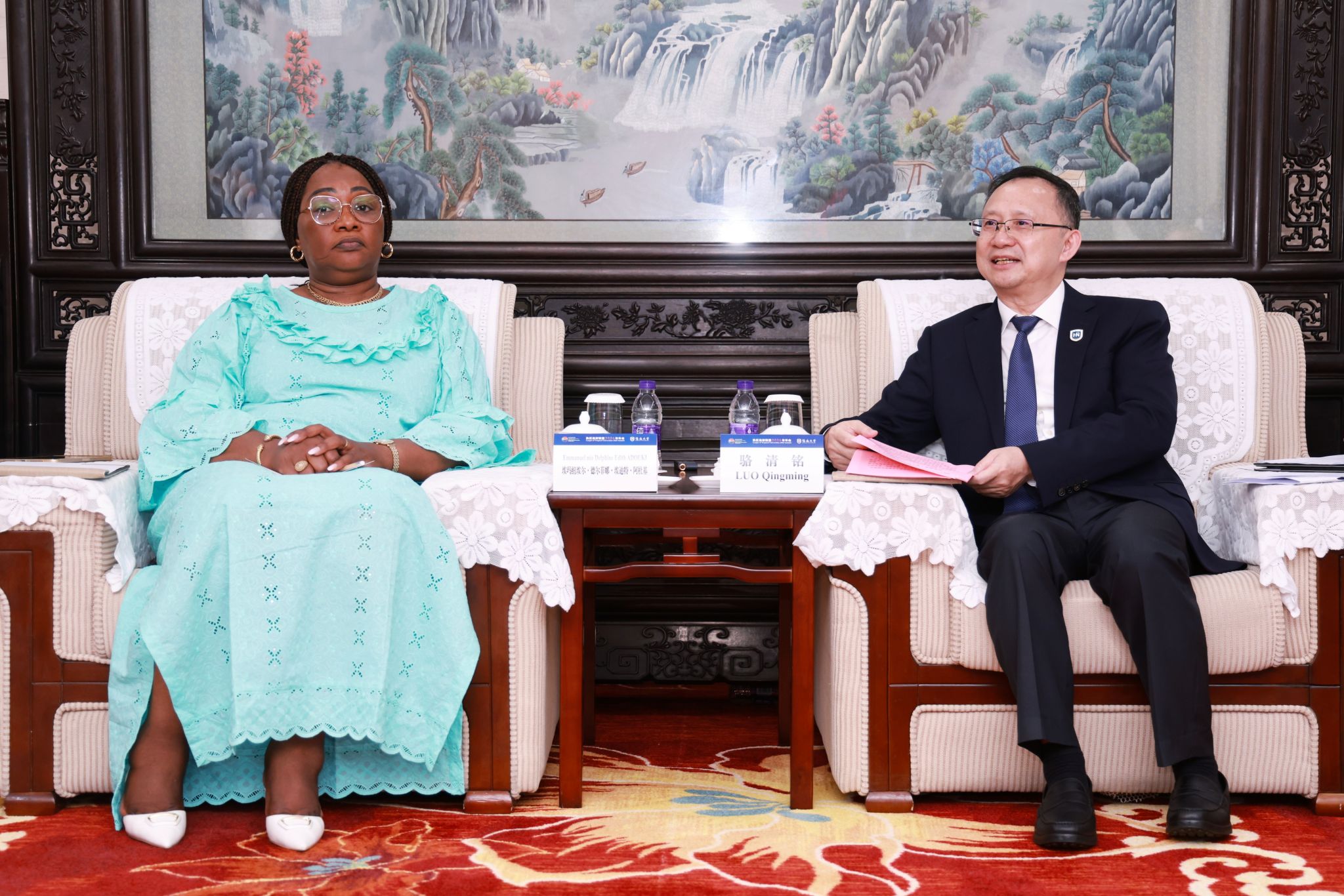
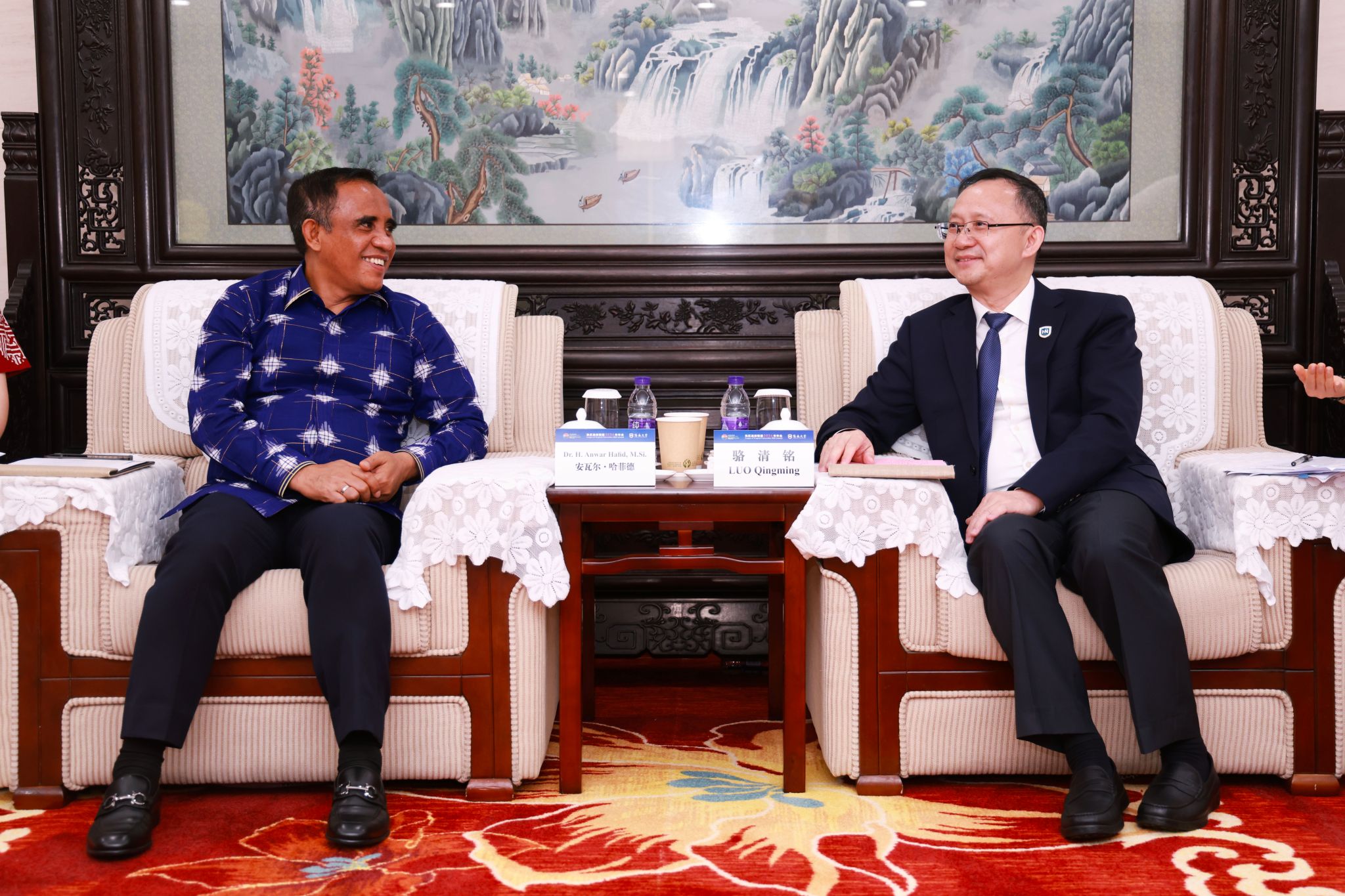
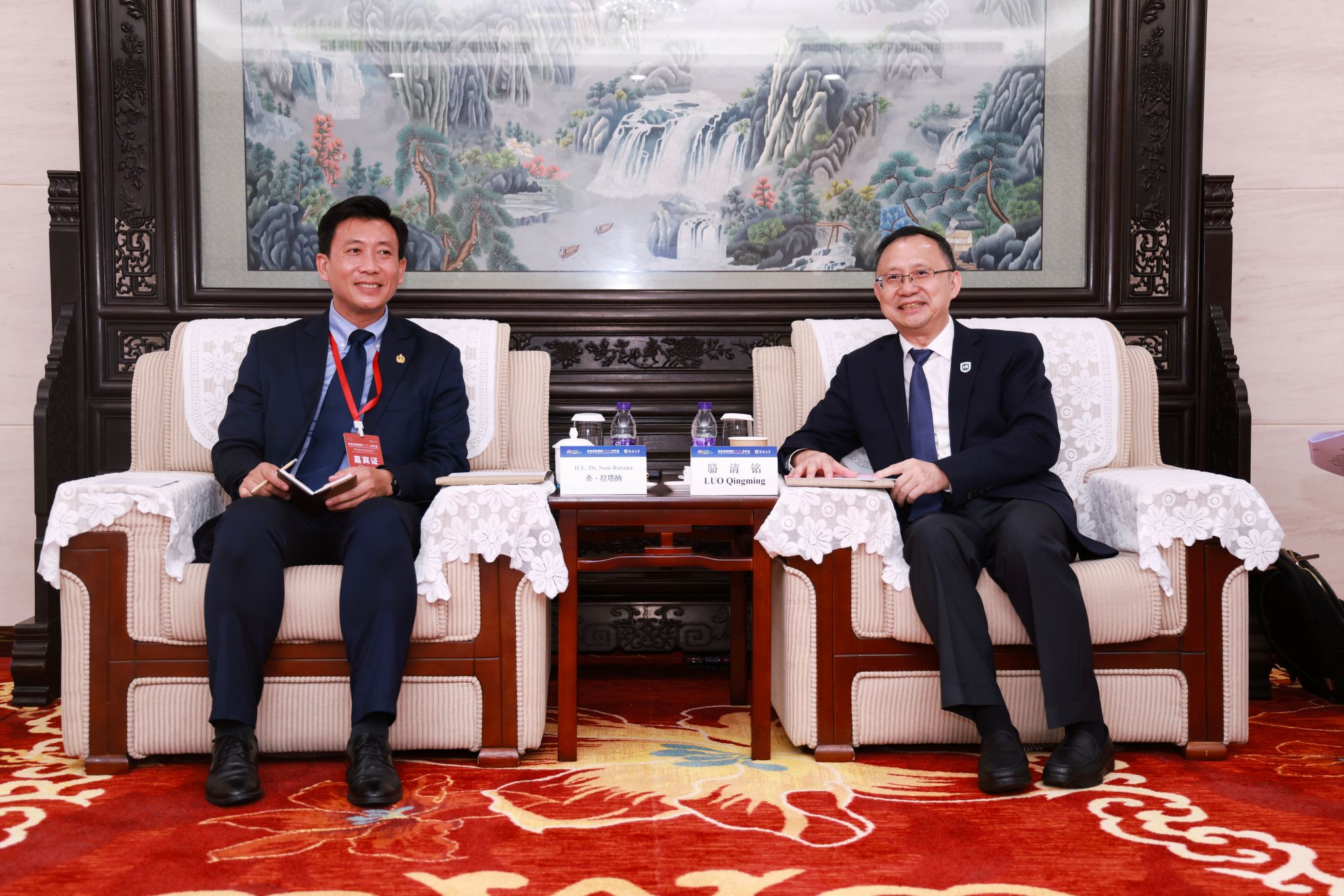
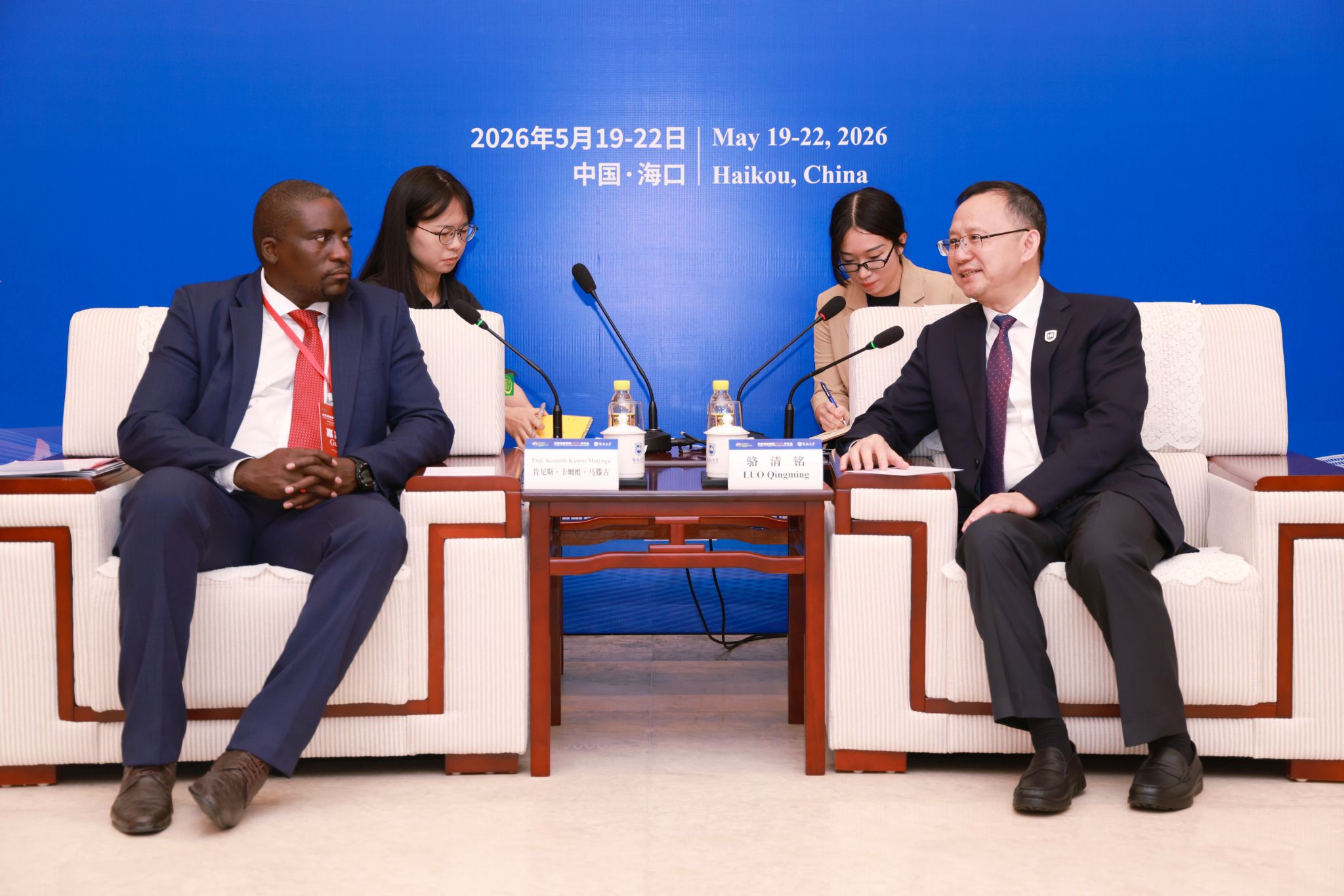
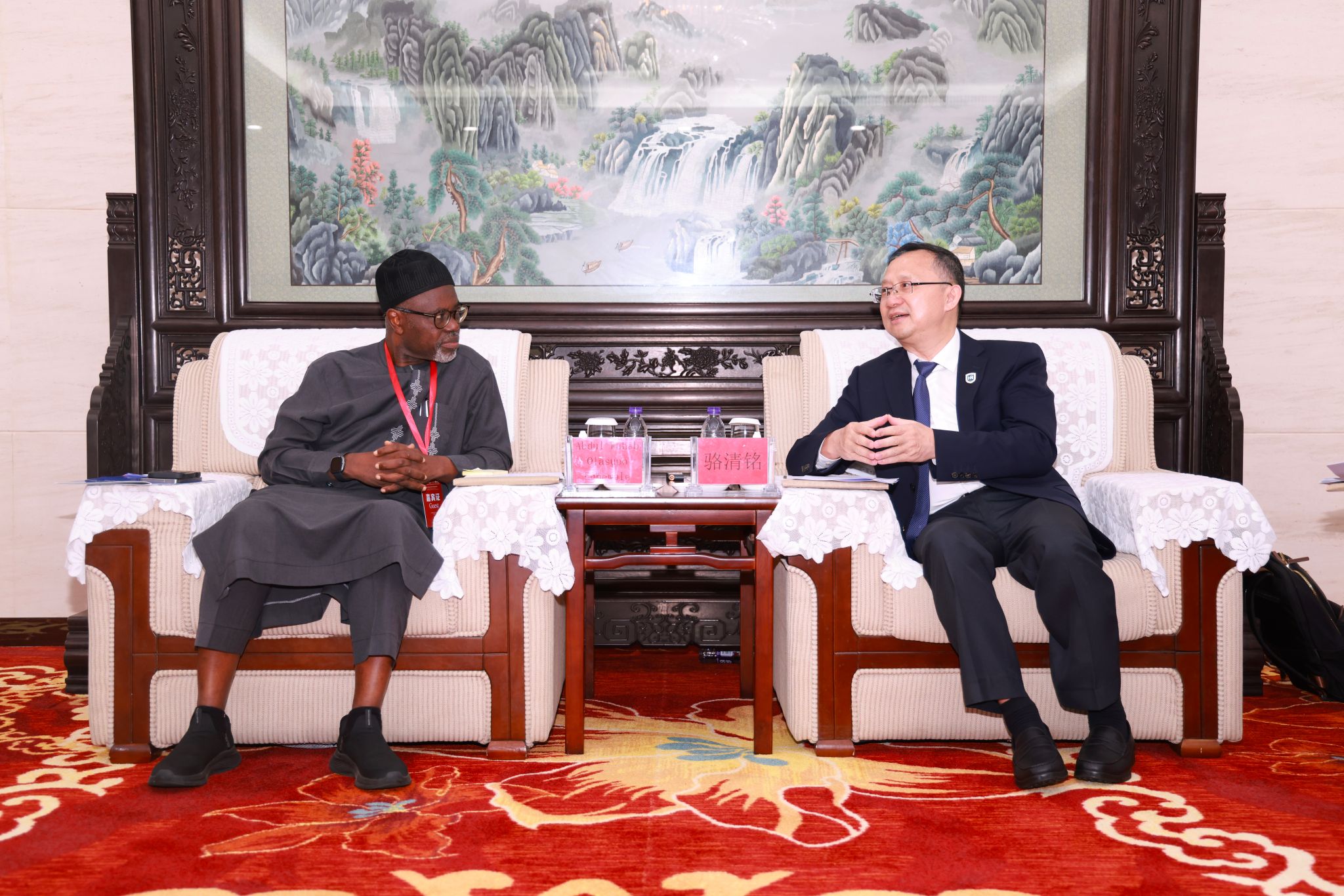
On May 20, Luo Qingming, Member of the Chinese Academy of Sciences and President of Hainan University (HNU), met with guests attending the League of Tropical Universities (LTU) 2026 Summit, at Zhaohua Building and the International Academic Exchange Center respectively. The distinguished guests included Emmanuel née Delphine Edith Adouki, Minister of Higher Education of the Republic of the Congo; Dr. H. Anwar Hafid, M.Si., Governor of Central Sulawesi Province of Indonesia; H. E. Som Ratana, Undersecretary of State of the Ministry of Education, Youth and Sport of Cambodia; Kenneth Kamwi Matengu, President of the Association of African Universities and Vice Chancellor of the University of Namibia; and Abdul Wahab Olasupo Egbewole, Vice Chancellor of the University of Ilorin, Nigeria. HNU Vice President Yue Wen accompanied President Luo at the meetings.
Minister Adouki stated that the Republic of the Congo attaches great importance to pragmatic cooperation with HNU in the field of higher education, and expressed appreciation for HNU’s support in educating Congolese international students. Briefing the audience on the country’s higher education development plan and the layout of newly established public universities, she expressed the hope that both sides would advance cooperation in areas including tropical agriculture, biomedicine, artificial intelligence, fisheries science, and aerospace educational programs. She also proposed to establish joint laboratories, to strengthen collaborative research and academic exchanges, and to enhance inter-university cooperation and cultural exchanges.
Dr. H. Anwar Hafid, M.Si. introduced the industrial strengths and development priorities of Central Sulawesi Province and congratulated HNU on its achievements in high-quality development. He noted that both sides enjoy strong complementarity in such fields as tropical agriculture, marine fisheries, nickel resource utilization, clean energy, and deep processing of agricultural products. He expressed the hope that the LTU would serve as a platform to deepen cooperation between HNU and Tadulako University, advance the construction of a Tropical Fisheries Science and Technology Demonstration Center, facilitate trade in high-quality agricultural products, and strengthen cooperation in Chinese-language education, talent cultivation, and technology transfer. These efforts would be made to create a model of provincial-university cooperation.
H. E. Som Ratana outlined Cambodia’s reform in higher education and its three major strategies: outcome-based education, digital transformation, and industry-education integration. He expressed appreciation for the achievements made by the Confucius Institute jointly established by HNU and the Royal University of Agriculture of Cambodia. He noted that Cambodia looks forward to strengthening cooperation with HNU in urgently needed areas such as food processing, bioengineering, digital technology, tropical agriculture, and agricultural mechanization. He also expressed anticipation that both sides would deepen student and faculty exchanges, joint training programs, and technological cooperation, while upgrading the Confucius Institute into a hub for industry-education integration to support Cambodia’s talent development and scientific and technological revitalization.
Kenneth Kamwi Matengu presented the University of Namibia’s needs for discipline development in applied nuclear science, fisheries, and new energy. He wished for a long-term cooperation mechanism with HNU and the LTU, advancing priority collaboration in fisheries science, nuclear medicine, artificial intelligence, and marine engineering, jointly establishing laboratories and overseas Science and Technology Backyards, while promoting credit transfer, joint degree programs, and the sharing of MOOC resources to support discipline development and talent cultivation in African universities.
Abdul Wahab Olasupo Egbewole elaborated on the University of Ilorin’s distinctive strengths and plans for the construction of a science and technology innovation park. He anticipated greater cooperation with HNU in areas including physical materials, tropical agriculture, food science, environmental engineering, joint research, and academic publishing. He stated that the University of Ilorin is willing to actively participate in the development of the LTU by advancing student exchanges, faculty visits, and joint applications for research projects, while jointly exploring pathways for collaborative development among universities in tropical regions and building inter-university cooperation into a model for the LTU.
Luo Qingming welcomed the guests and provided an overview of HNU’s progress in its “Double First-Class” initiative, joint construction by the Ministry and the Province, discipline development, scientific research and innovation, international cooperation, and the development of the LTU. He noted that the LTU has brought together 121 universities and research institutions from 50 countries and regions, emerging as an important platform for global cooperation in higher education within tropical regions. Looking ahead, Luo expressed HNU’s readiness to work with all parties, using the LTU as a bond to deepen joint talent cultivation, build collaborative scientific research and innovation platforms, advance industry-education integration, and expand people-to-people exchanges. Focusing on priority areas such as tropical agriculture, marine science and technology, life and health sciences, and digital education, HNU aims to drive the effective implementation of cooperative projects and jointly enhance the LTU’s influence. These efforts seek to contribute the strength of higher education institutions to the prosperity of tropical regions and the building of a community with a shared future for humanity.
During the summit, HNU Vice Presidents Gao Diangong and Liu Qian respectively met with delegations from the University of Zimbabwe, Dili University of Timor-Leste, University of Cuenca, and Ghana Communication Technology University. They exchanged extensive views on inter-university cooperation and the LTU’s affairs, injecting fresh momentum into the high-quality development of the LTU.
Representatives from participating universities and institutions, as well as heads of relevant departments and offices of Hainan University, attended the meetings.
Translated by Zhang Xiaohan
Proofread by Yang Jie