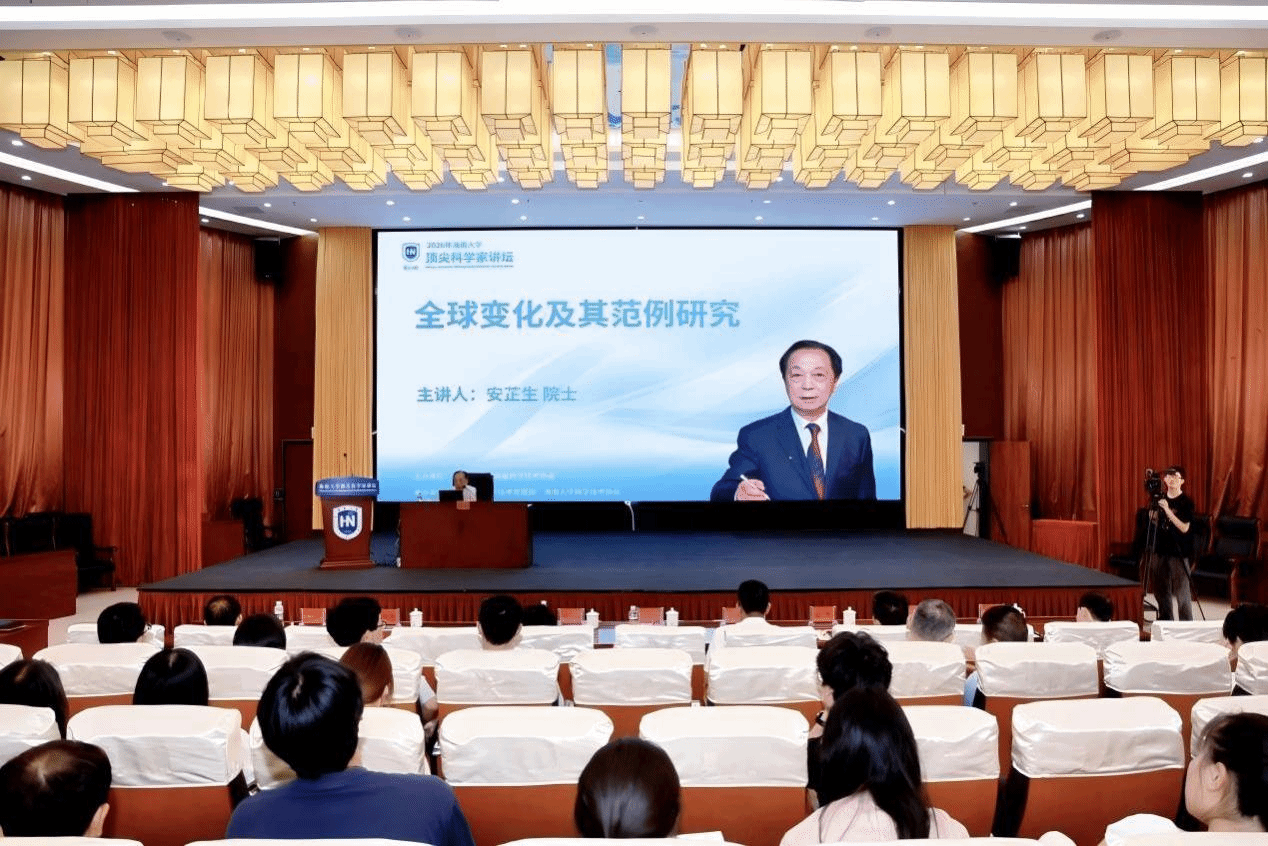
The 64th Distinguished Scientist Lecture of Hainan University was held in the lecture hall on the second floor of Mingde Building on the morning of May 25. Academician An Zhisheng of the Chinese Academy of Sciences delivered a lecture titled Global Change and Its Case Studies. Academician Zhou Weijian of the Chinese Academy of Sciences, along with Gao Diangong, He Yong and Yue Wen, members of the Standing Committee of the Party Committee and university leaders of Hainan University, attended the forum. The event was chaired by Yue Wen.
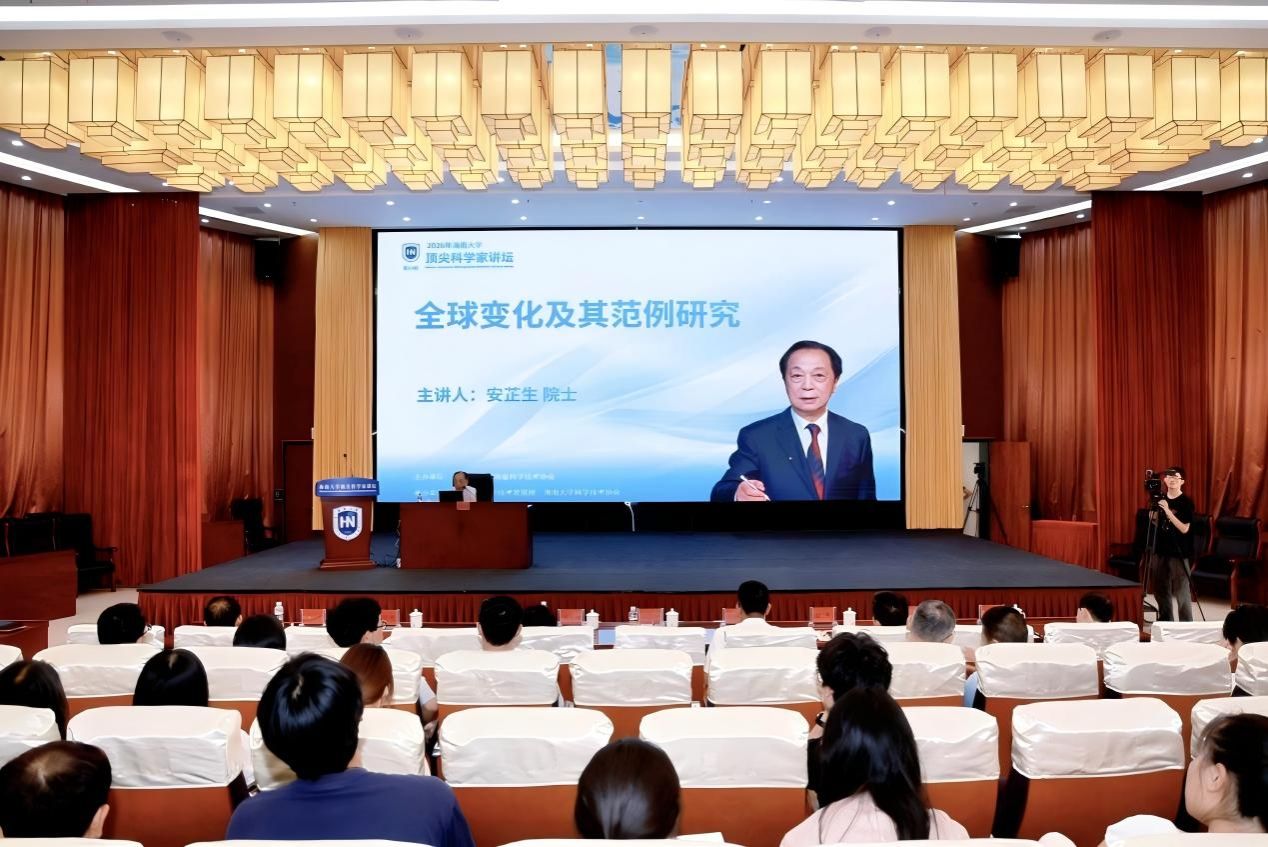
On the morning of May 25, the 64th Distinguished Scientists Lecture of Hainan University is held in the lecture hall of Mingde Building. Photo by Duan Tianyue.
Starting with the background and development of global change and Earth System Science (ESS), Academician An reviewed the evolution of major international scientific programs such as the World Climate Research Programme and the International Geosphere-Biosphere Programme, and outlined China’s active participation and contributions to global change research. He noted that Chinese loess, as a marker and tracer of interactions among Earth’s spheres, records the historical changes in global ice volume, the Asian monsoon and Northern Hemisphere westerlies. Alongside deep-sea sediments and polar ice cores, it ranks among the three pillars of global climate and environmental change research.
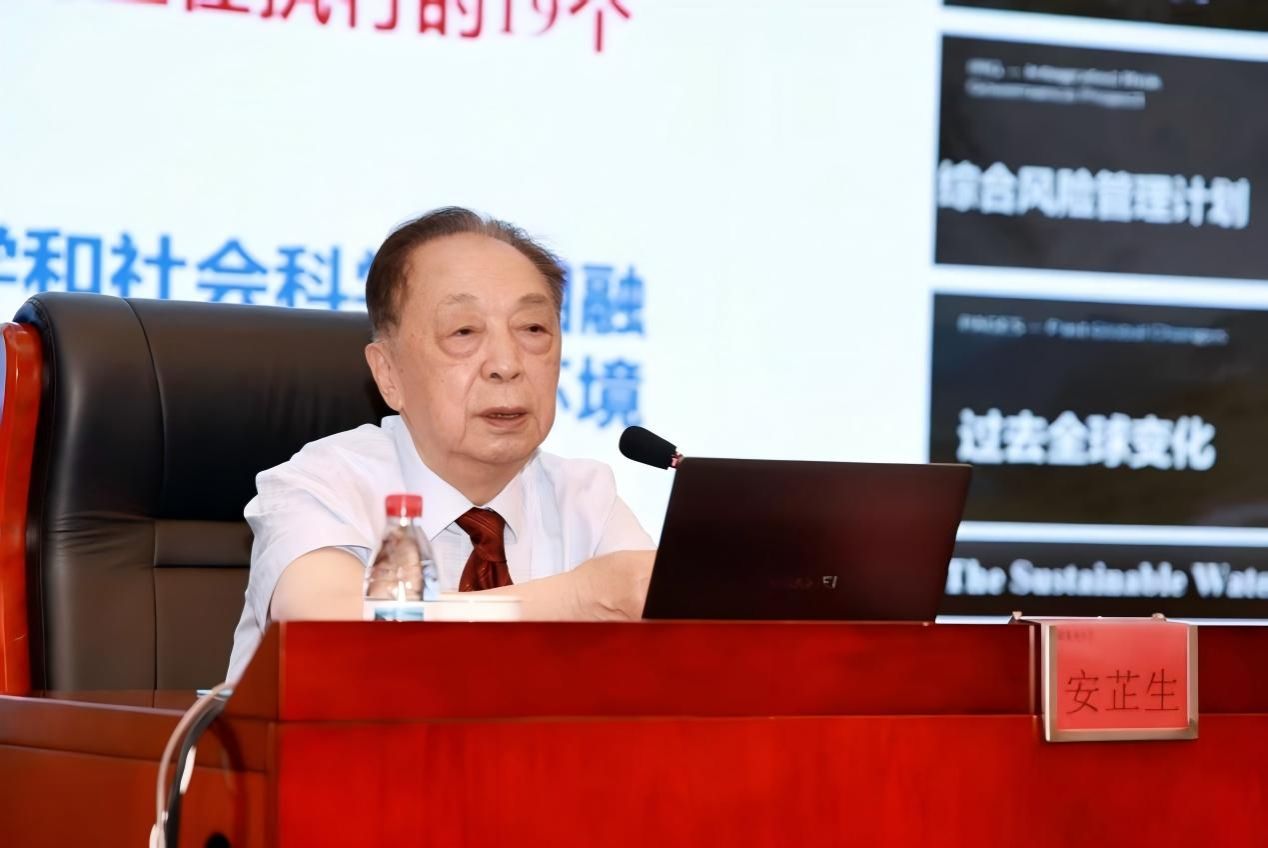
On the morning of May 25, the 64th Distinguished Scientists Lecture of Hainan University is held in the lecture hall of Mingde Building. An Zhisheng is delivering the lecture. Photo by Gao Kehe.
Drawing on typical cases including Yellow River runoff, Loess Plateau ecology, disaster risks in the Yellow River’s Qiankun Bend, paleoweather records from giant clams in the South China Sea, and climate transitions driven by the Antarctic ice sheet, Academician An revealed the combined impacts of natural processes and human activities on the Earth’s environment. He also shared the applications of research findings in ecological governance, pollution prevention and control, and regional development. He emphasized that the fundamental goal of global change and ESS research is to systematically manage the Earth based on ESS achievements and serve sustainable social development.
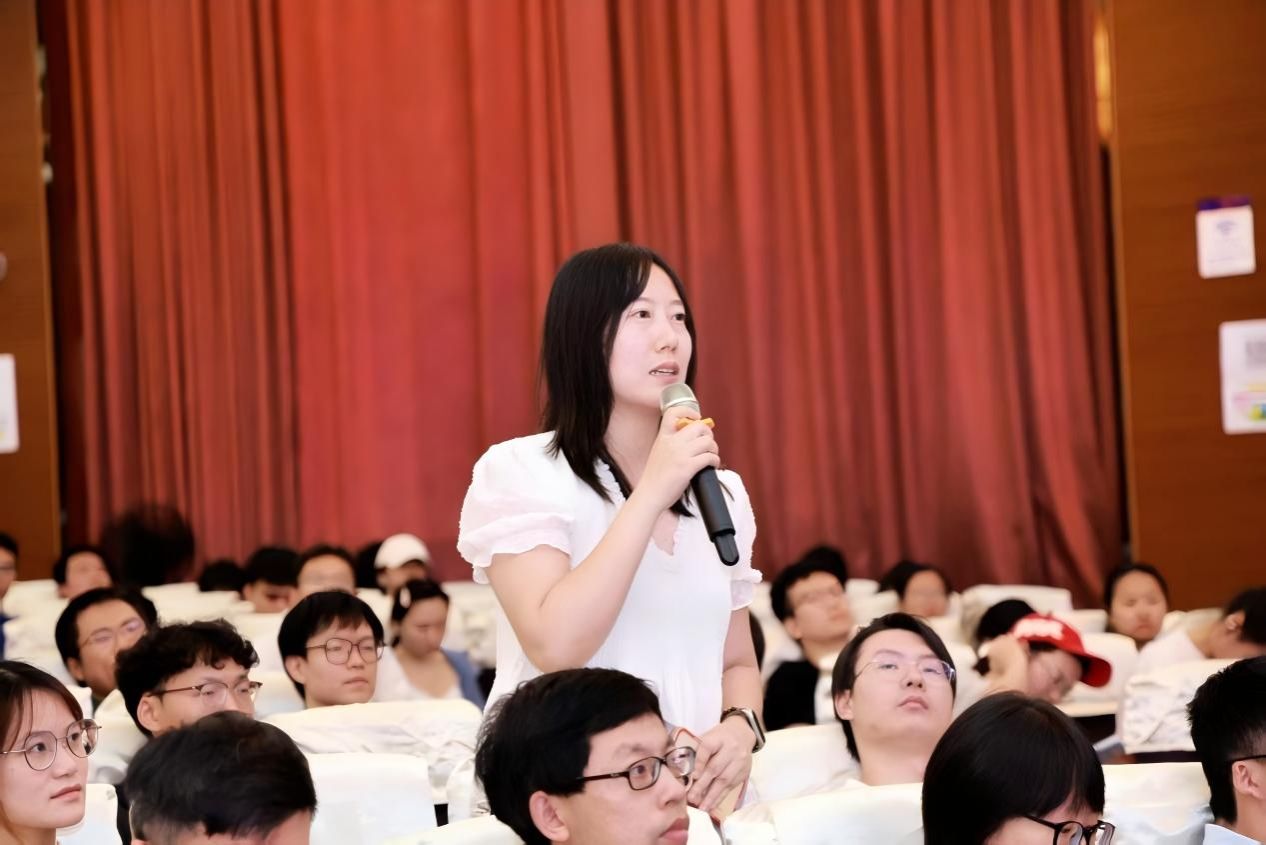
On the morning of May 25, the 64th Distinguished Scientists Lecture of Hainan University is held in the lecture hall of Mingde Building This is the Q&A session. Photo by Duan Tianyue.
During the interactive Q&A session, teachers and students raised questions covering the differing impacts of human activities and natural climate fluctuations, the possibility of future climate transitions, the balanced effects of Yellow River ecological governance, and bottlenecks in global change research. Academician An provided detailed answers to each question, sharing his cutting-edge insights and research experience.
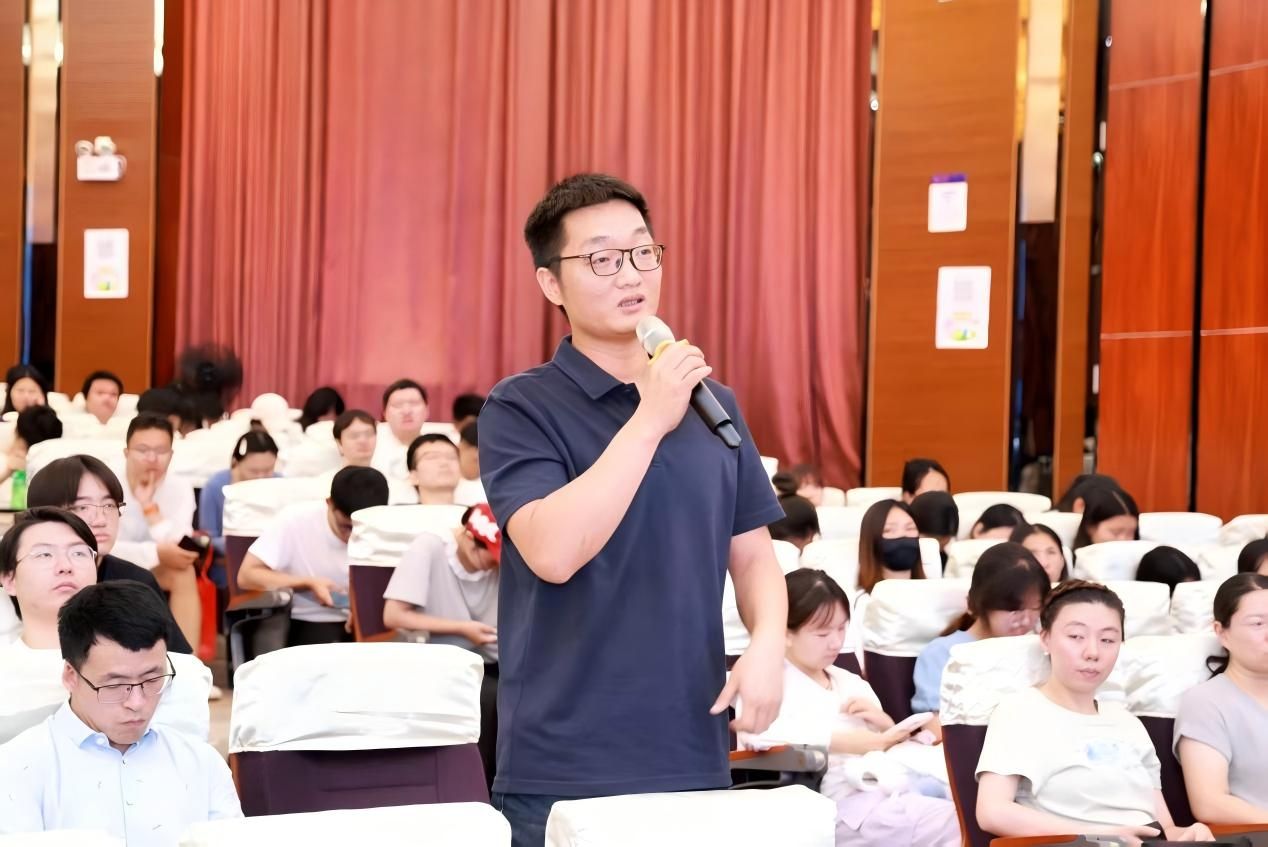
On the morning of May 25, the 64th Distinguished Scientists Lecture of Hainan University is held in the lecture hall on the second floor of Mingde Building, with sessions open for questions from faculty and students. Photo by Duan Tianyue.
Relevant officials from the Hainan Association for Science and Technology (HAST), heads of relevant units and departments of Hainan University, as well as teachers and student representatives from the Haidian, Danzhou, Mission Hills (including Chengdu Teaching Site) and Yazhou campuses attended the forum both in person and online.
Translated by Buyue Shi
Proofread by Yanchun Zhao