On the morning of May 20, 2026, the League of Tropical Universities (LTU) 2026 Summit President Panel Talk was held at the Hainan University (HNU) Arena in Haidian Campus.
With the theme of “Digitalization of Education”, this event brought together distinguished experts and scholars from the educational and industrial sectors in tropical regions to discuss the transformation of higher education in the digital era and explore new ways for collaborative development among tropical universities.
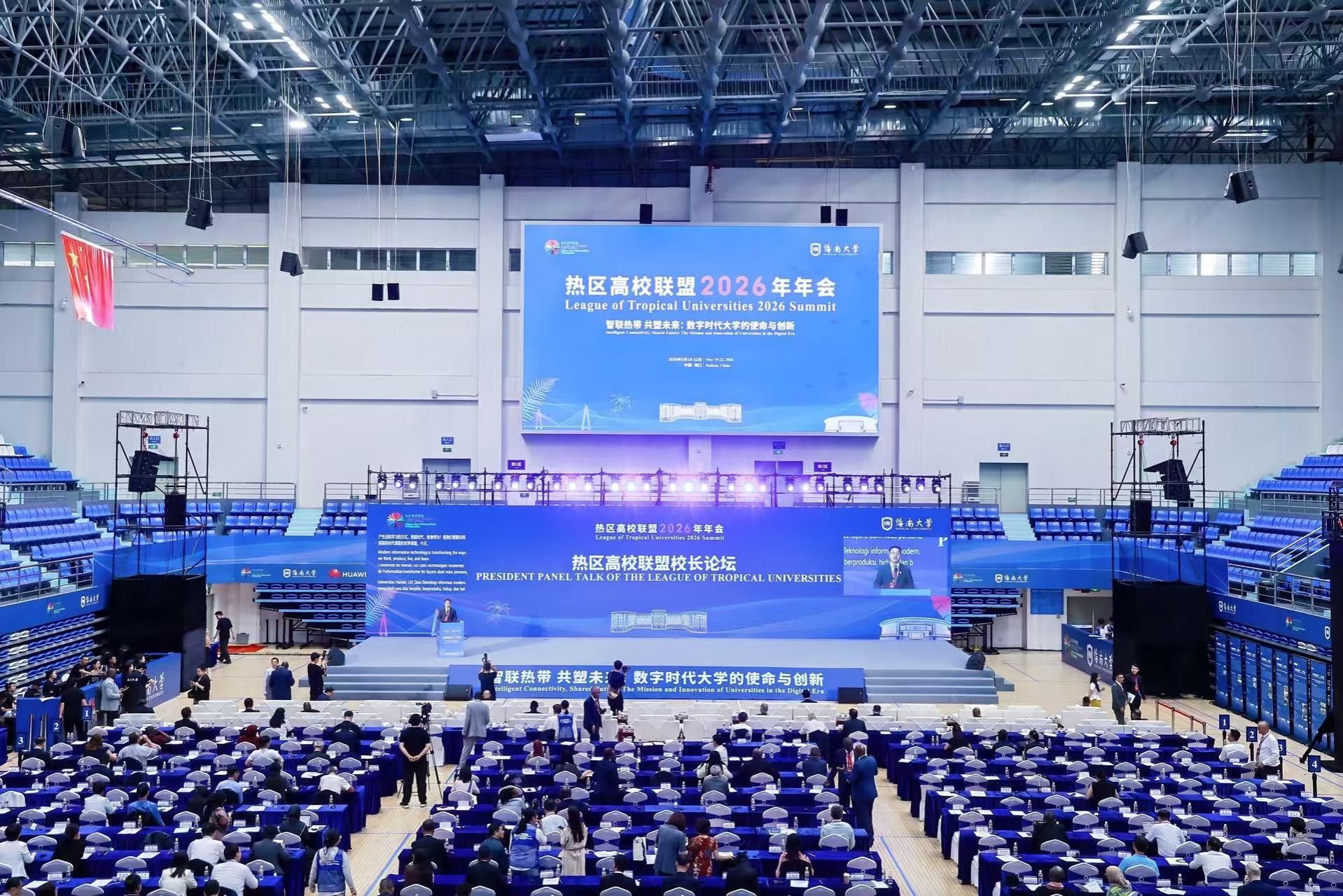
On the morning of May 20, the League of Tropical Universities (LTU) 2026 Summit is held at the HNU Arena. (Photo by HNU’s Publicity Department)
The President Panel Talk is honored to have the participation of Dato' Stephen Cheah, Chairman of the Asia Institute of Sustainability, Entrepreneurship & Diplomacy (AiSED), and The Southeast Asia Chapter of UNESCO Entrepreneurship Education Network; Ir. Mohamed Firouz Asnan FASc, President of Universiti Teknologi PETRONAS, Malaysia; Prof. Wahab Egbewole, Vice Chancellor of the University of llorin, Nigeria; Mr. Larry Kofi Agbador, Deputy Executive Director of the Centre for National Distance Learning and Open Schooling (CENDLOS), Ministry of Education, the Republic of Ghana; Assoc. Prof. Dr. Thakerng Wongsirichot, Vice President for Academic and International Affairs of Prince of Songkla University, Thailand; Mr. Wang Yi, Vice President of Chaoxing Group; and Zhang Jiyou, Deputy Chair of Hainan University Council. The event was moderated by Liu Qian, Vice President of Hainan University.
In his opening remarks, Stephen Cheah emphasized that digitalization and artificial intelligence bring new opportunities to tackle the imbalance in educational resources in tropical regions while fundamentally reshaping global education ecosystems. He highlighted that by upholding the principles of openness, sharing, equality and cooperation, the League of Tropical Universities needs to enhance educational accessibility and equity with digital technologies so as to promote the deep integration of innovation and entrepreneurship education with regional sustainable development, jointly fostering talent with international vision and innovative capabilities.
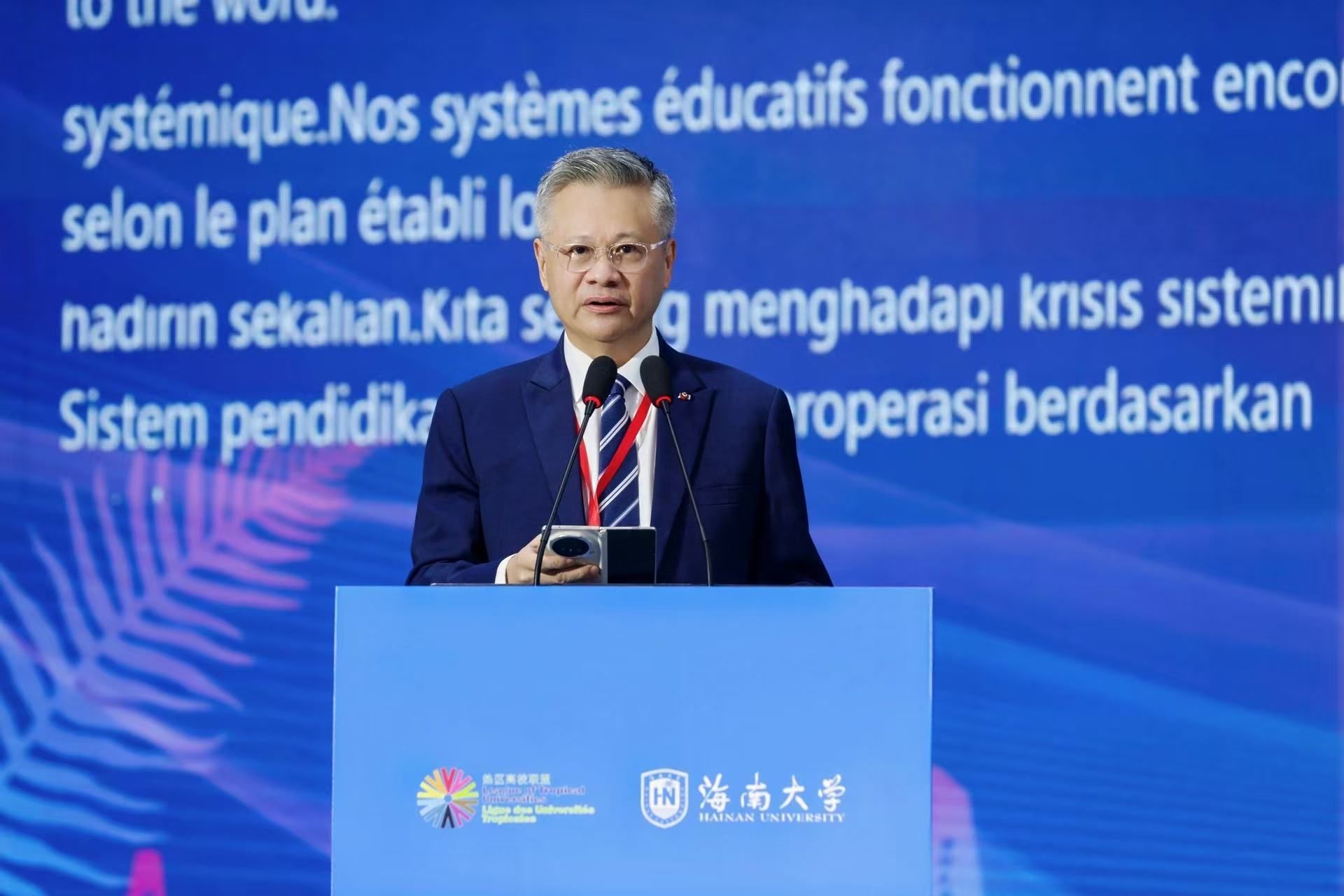
Stephen Cheah gives opening remarks. (Photo by HNU’s Publicity Department)
Mohamed Firouz Asnan delivered a keynote speech titled “Educational Transformation in the Era of Digital Intelligence”. He stated that artificial intelligence and digital technologies are driving higher education to transform its function from knowledge transmission to competency development and innovation. Universities should reconstruct curriculum systems and teaching models, promote deep integration of digital tools with classroom teaching and research training, cultivating talent with multidisciplinary competencies to meet industrial demands in the future. It is only when educators, learners, and technology become deeply integrated that the true value of education in an intelligent age can be realized.
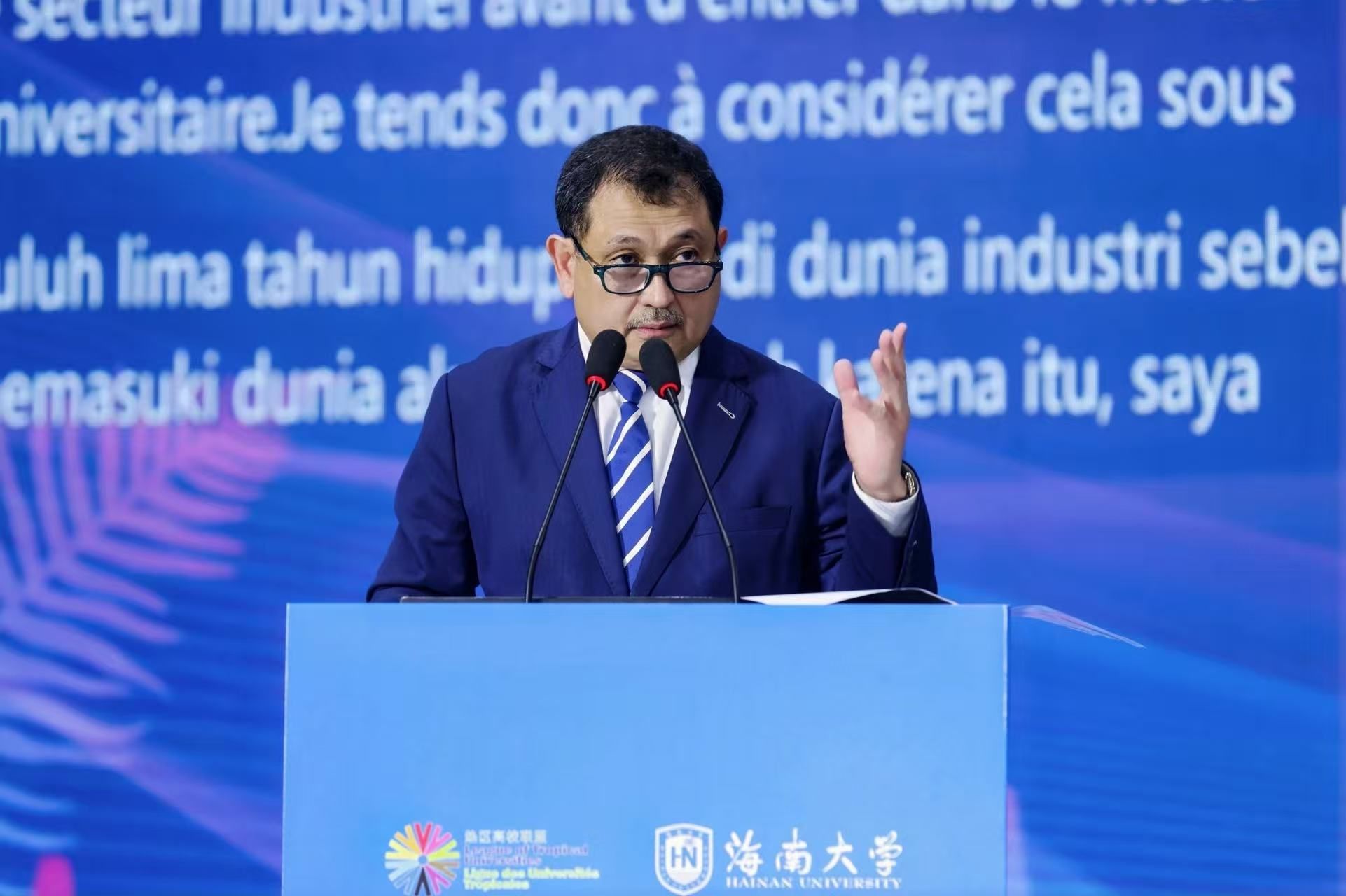
Mohamed Firouz Asnan gives keynote speech. (Photo by HNU’s Publicity Department)
In his keynote address titled “Digital Transformation in Higher Education: Practices, Experiences and Strategic Reflections from the University of Ilorin”, Prof. Wahab Egbewole shared the experiences in exploring ways to integrate information and communication technology into teaching and research, implement blended teaching models, and develop international collaborations. He analyzed the practical challenges facing higher education institutions in Africa, including insufficient funding, the need to enhance digital literacy, and the inadequacy of electricity and network infrastructure. He emphasized that digital transformation requires the coordinated advancement of sustained investment, policy support, and international cooperation.
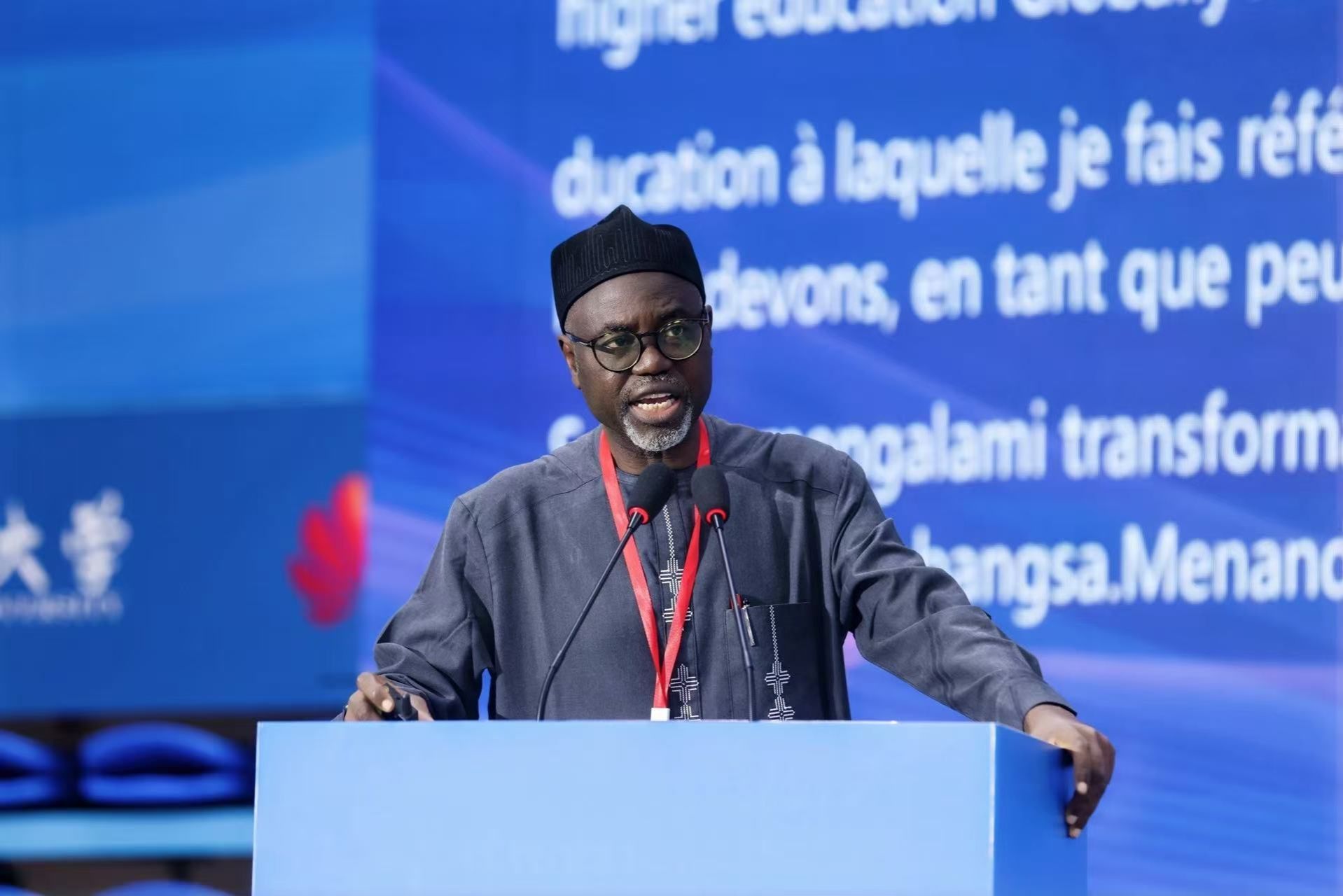
Wahab Egbewole gives keynote speech. (Photo by HNU’s Publicity Department)
Mr. Larry Kofi Agbador, in his keynote address titled “Digital Education in Ghana: From Policy Formulation to Inclusive Implementation”, shared Ghana’s experiences in digital infrastructure construction, the promotion of online learning platforms, and the assurance of educational equity. He emphasized that digital education is not merely a technological upgrade but a vital pathway toward the development of educational equity and inclusiveness. He called on tropical countries to strengthen experience-sharing and coordinated cooperation, jointly elevating the development of digital education.
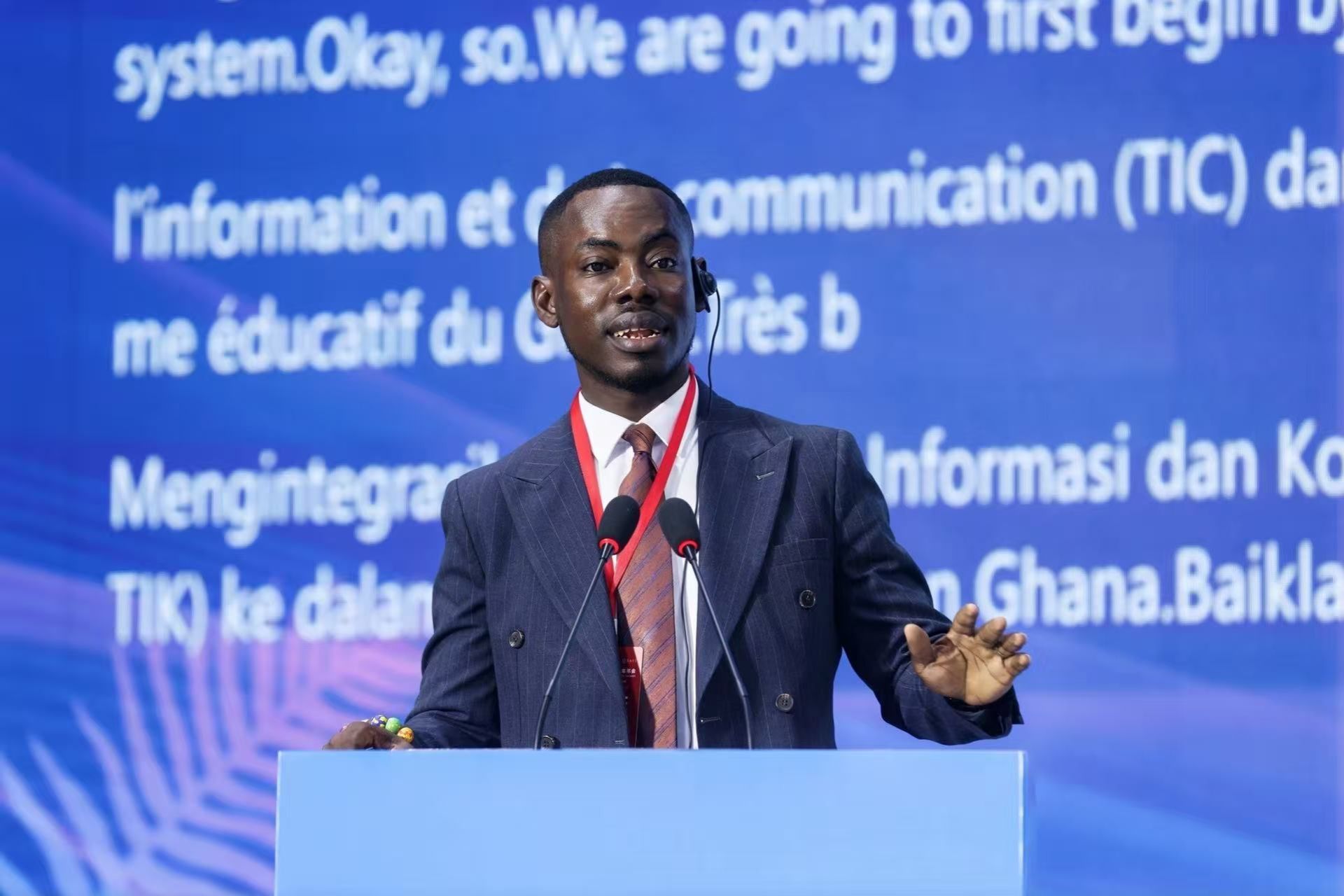
Larry Kofi Agbador gives keynote speech. (Photo by HNU’s Publicity Department)
Dr. Thakerng Wongsirichot, in his speech titled “The Learning Revolution in the AI Era: From Classroom to the World”, stated that artificial intelligence is profoundly changing teaching philosophies and learning paradigms. He noted that education in the future will place greater emphasis on personalized learning, global collaboration, and interdisciplinary integration. He stressed that universities need to pay attention to ethical risks and educational equity in the application of artificial intelligence, and promote the development of technology for good.
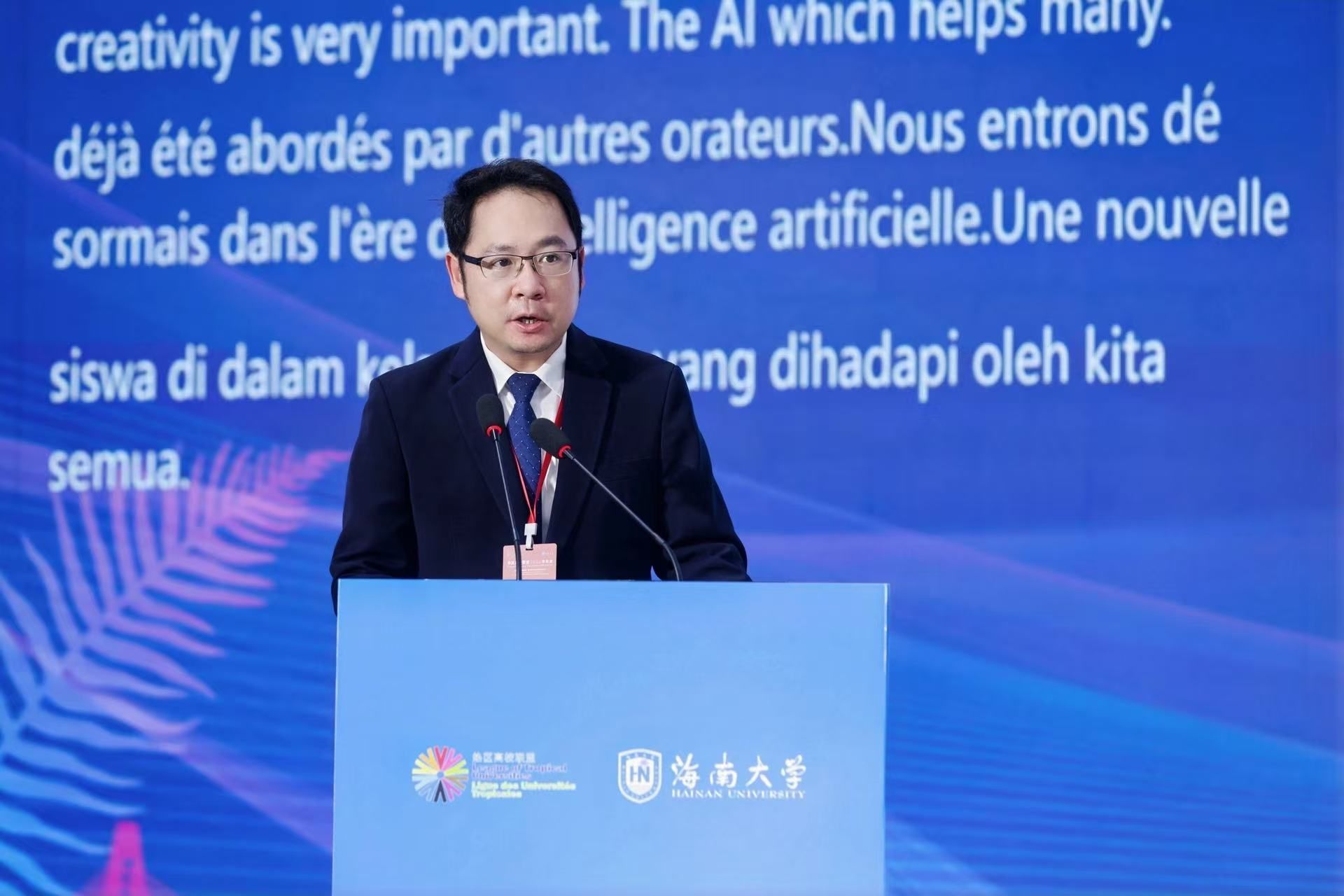
Thakerng Wongsirichot gives keynote speech. (Photo by HNU’s Publicity Department)
Wang Yi, in his speech with the title of “Building a Cross-Border Learning Ecosystem for Smart Education Through the Tropical Regions”, stated that artificial intelligence is accelerating the transformation of curriculum systems, teaching models, and talent cultivation mechanisms. With smart education platforms and AI technologies, universities can jointly construct and share curriculum resources, provide intelligent support for learning processes, and achieve collaborative innovation in scientific research, thereby further enhancing the level of digitalization and the quality of talent development.
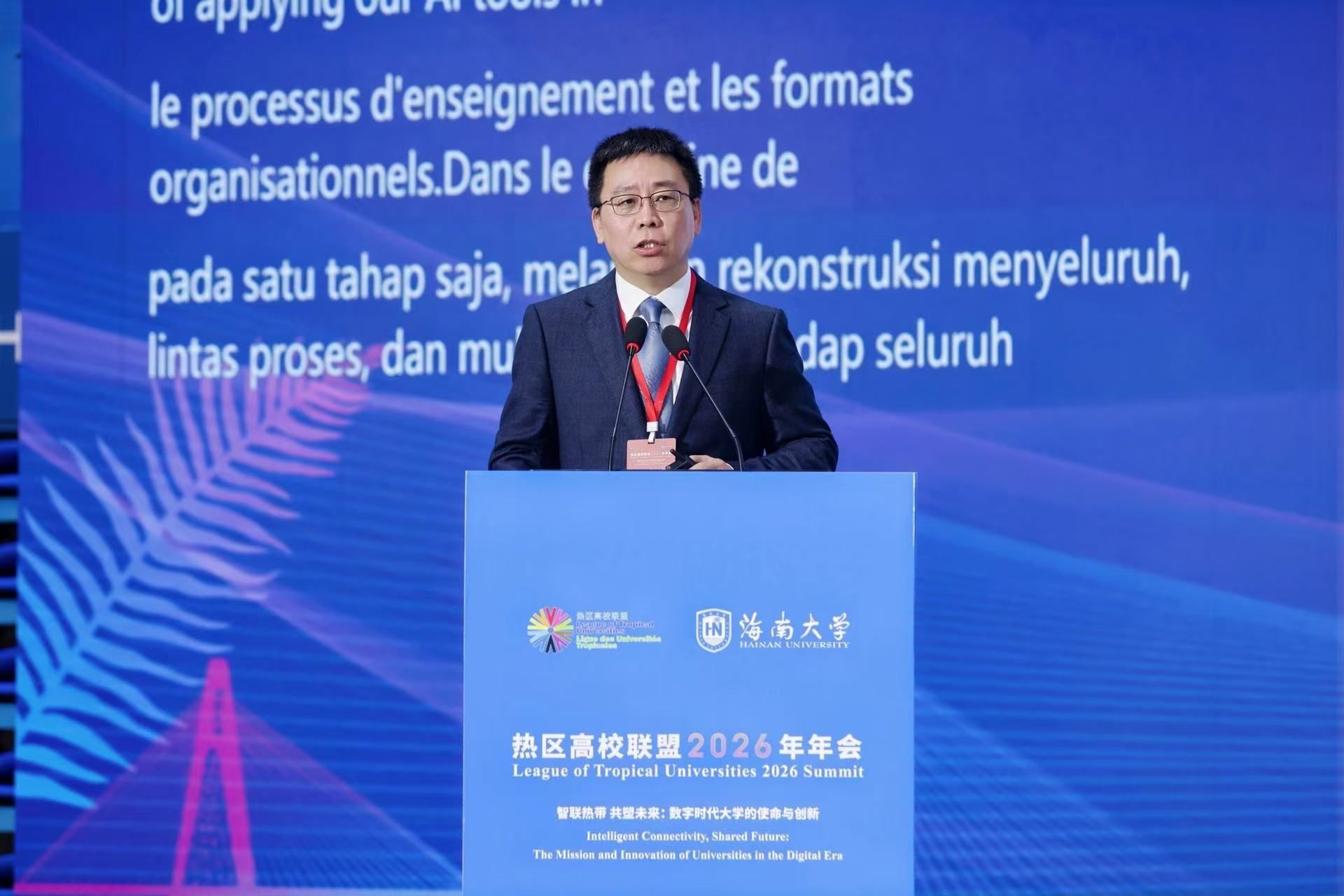
Wang Yi gives keynote speech. (Photo by HNU’s Publicity Department)
In his keynote speech titled “Hainan University’s Exploration of AI-Empowered Personalized Development for Students”, Liu Qian noted that Hainan University is advancing the exploration of the “One Student, One Plan” personalized cultivation model through a comprehensive credit system and the digitalization of education. He said that with smart course platforms, AI teaching assistants, and campus intelligent agents, HNU will continuously improve the curriculum quality, students’ learning experiences, and the effectiveness of talent cultivation, promoting the development of a smart education ecosystem.
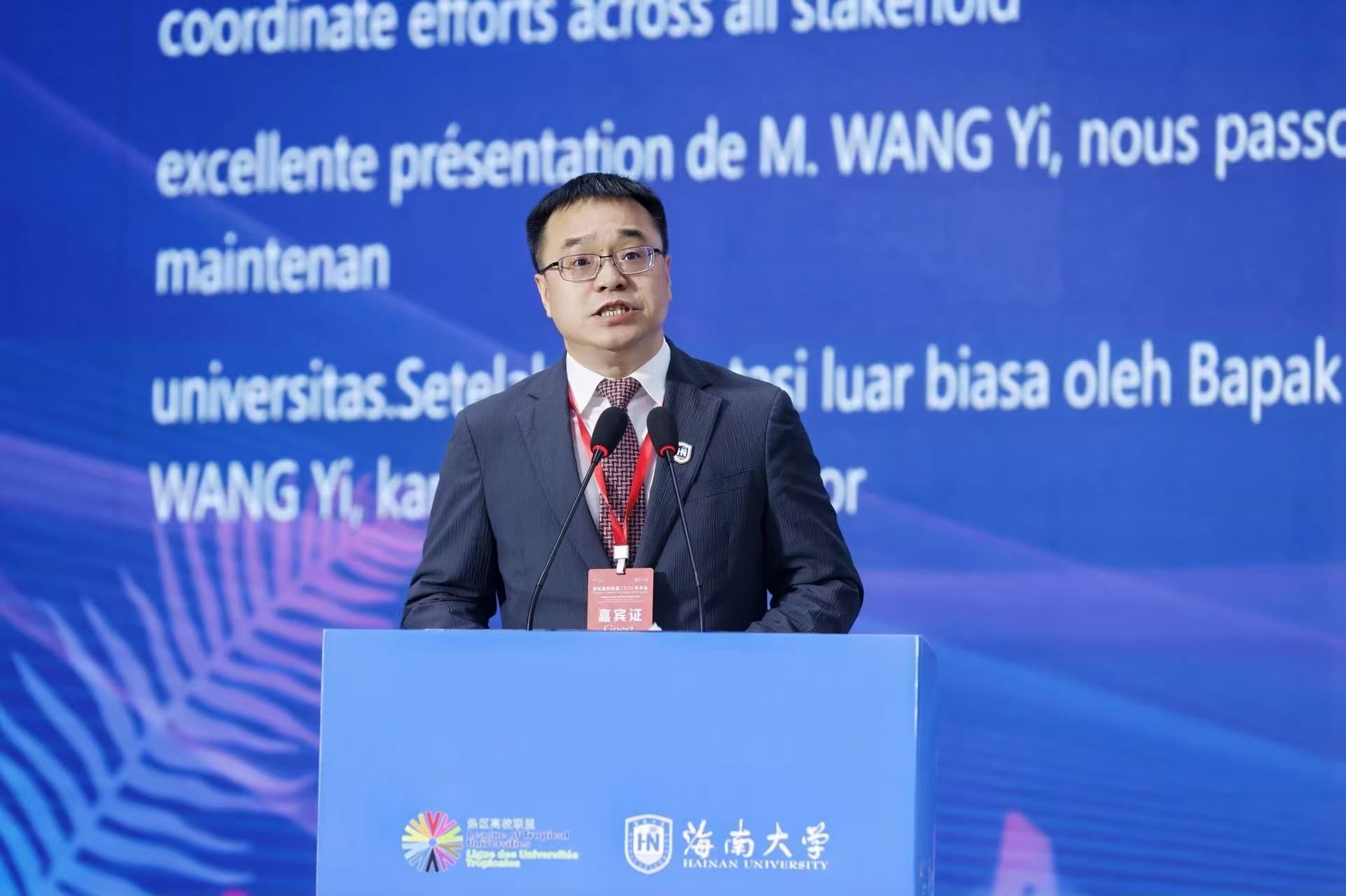
Liu Qian gives keynote speech. (Photo by HNU’s Publicity Department)
The LTU was jointly initiated by Hainan University and seven universities and research institutions from tropical regions worldwide in 2023. The President Panel Talk serves as one of the core events of the LTU 2026 Summit, featuring in-depth exchanges on topics such as educational transformation in the digital intelligence era, digital education governance in the tropics, reshaping teachers’ roles and capacity building in the digital intelligence era, digital intelligence empowering personalized lifelong learning, digital literacy and leadership, opportunities and challenges for tropical cooperation in the wave of digital intelligence. This event provides a high-level platform for tropical universities to share experiences and deepen cooperation, while building broad consensus to promote high-quality development of higher education in global tropical regions.
The event was attended by leaders of Hainan University, along with heads of HNU’s relevant departments, representatives of LTU members, experts and scholars from domestic and foreign universities and research institutions, and representatives of HNU’s faculty and students.
Translated by Chen Chuanxian