On the afternoon of March 27, the 59th Distinguished Scientist Lecture was held in the lecture hall of the Social Sciences Complex at Hainan University. Wan Lijun, a member of the Chinese Academy of Sciences and researcher at the Institute of Chemistry, delivered a report titled “The Development History and Research Status of Lithium-ion Batteries”. Among the attendees were Lyu Xunbo, Deputy Director of the Talent Development Bureau of the Hainan Provincial Committee of the CPC, Xu Wei, Member of the Leading Party Group and Vice Chairman of the Hainan Association for Science and Technology, and Luo Qingming, Member of Chinese Academy of Sciences and President of Hainan University, along with other university leaders.
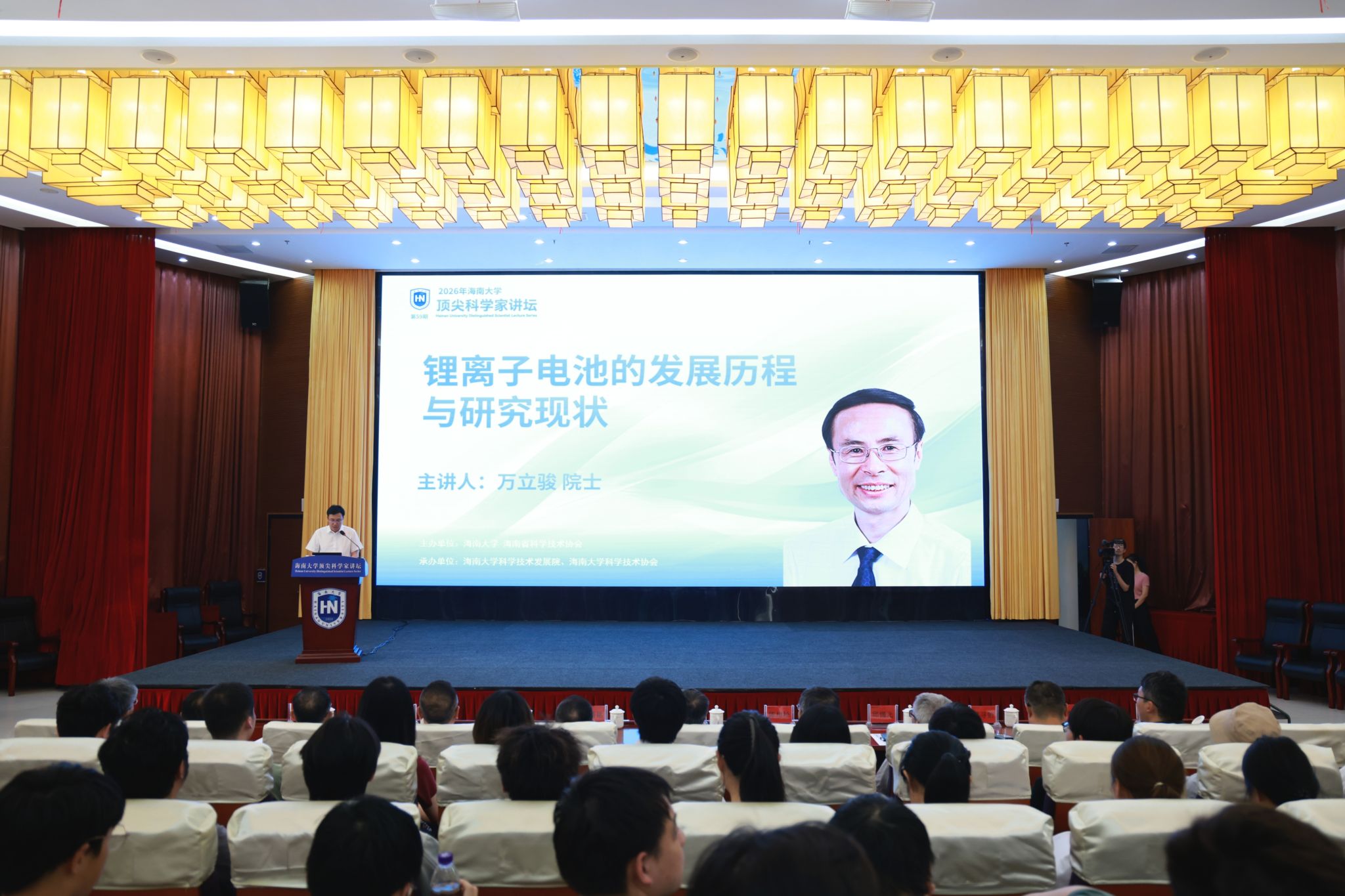
On the afternoon of March 27, the 59th Distinguished Scientist Lecture of Hainan University is held in the lecture hall of the Social Sciences Complex. (Photo by Xie Lu)
Starting with the rapid evolution of electrochemical power sources, Wan Lijun explained frequently-used electrochemical power systems, the development and application history of lithium-ion batteries (LIBs), and their basic working principles and components. Focusing on current research and innovation in electrode materials, he introduced several technical methods, including the controlled synthesis of single-crystal high-nickel cathodes, bonding network strategies to alleviate the volume expansion of silicon-based anodes, and material confinement based on hollow carbon spheres and surface coating. Additionally, he shared insights into safety of LIBs, showcasing research on high-safety flame-retardant electrolytes and in-situ cured polymer electrolytes. He also discussed the latest trends in the efficient recycling of LIBs.
Wan Lijun systematically explained the dynamic process analysis and characterization techniques of LIBs. He elaborated on in-situ electrochemical characterization techniques, especially the application of Electrochemical Scanning Tunneling Microscopy (ECSTM) and Electrochemical Atomic Force Microscopy (ECAFM) in studying microscopic mechanisms, such as electrode interface reactions and the dynamic formation of the SEI film. Drawing on his own and his team’s research experience, Wan offered a vision for the future of LIBs. He noted that energy research is an eternal pursuit and that the future of new energy lies with the young generation. He encouraged students to embrace challenges, seize opportunities, build on past achievements and forge ahead, and continuously tackle key scientific problems.
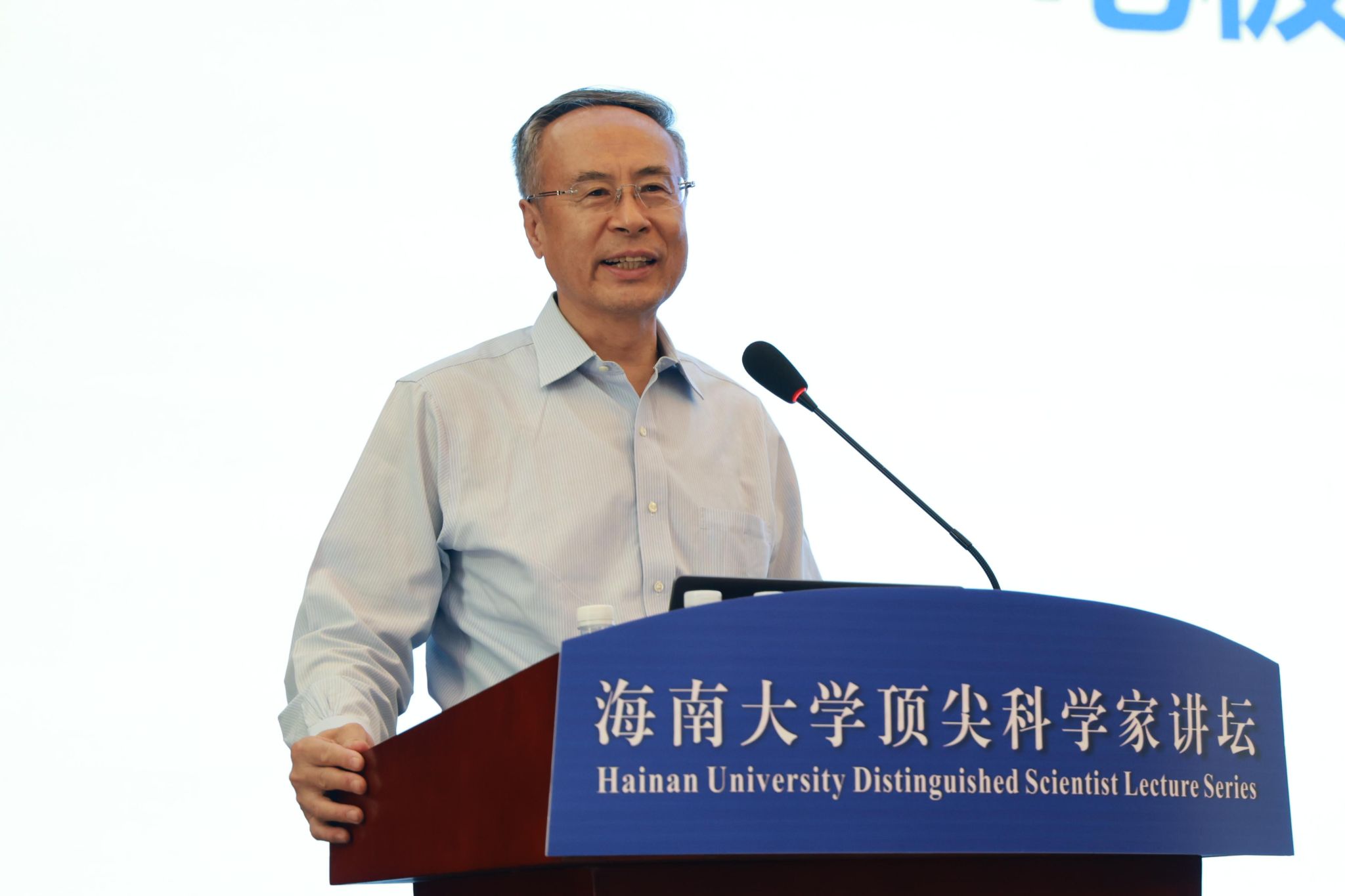
On the afternoon of March 27, the 59th Distinguished Scientist Lecture of Hainan University is held in the lecture hall of the Social Sciences Complex. Wan Lijun delivers the report. (Photo by Xie Lu)
The venue was packed. Faculty and students engaged in discussions on topics such as selection of corporate electrode material, roadmaps of new energy development, and enhancement of graduate students’ innovation capabilities. Wan Lijun addressed each question with professional expertise.
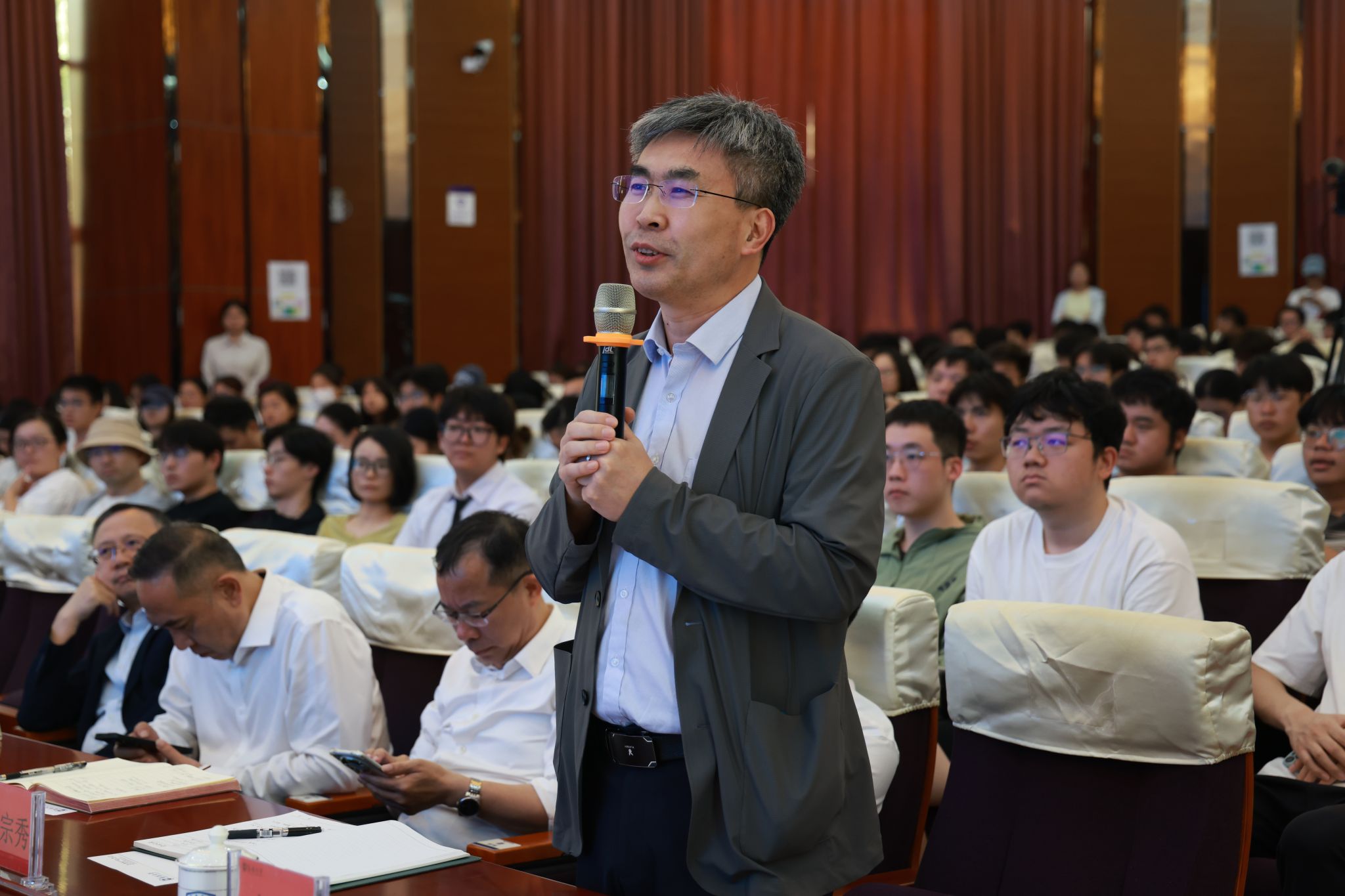
On the afternoon of March 27, the 59th Distinguished Scientist Lecture of Hainan University is held in the lecture hall of the Social Sciences Complex. Faculty and students raise questions. (Photo by Xie Lu)
Officials from the Hainan Association for Science and Technology, heads of relevant units and departments at Hainan University, as well as faculty and students from HNU’s four campuses—Haidian, Danzhou, Mission Hills (including the Chengxi Teaching Site) and Yazhou, participated in the lecture both online and on site.
Translated by Lin Junjun
Proofread by Wang Kexian
English version
HNU Holds 59th Distinguished Scientist Lecture
2026.03.27 22:30
On the afternoon of March 27, the 59th Distinguished Scientist Lecture was held in the lecture hall of the Social Sciences Building at Hainan University. Wan Lijun, a member of the Chinese Academy of Sciences and Researcher at the Institute of Chemistry, CAS, delivered a keynote report titled “The Development History and Research Status of Lithium-ion Batteries”. Key attendees included Lyu Xunbo, Deputy Director of the Talent Development Bureau of the Hainan Provincial Committee of the CPC, Xu Wei, Member of the Leading Party Group and Vice Chairman of the Hainan Association for Science and Technology, and Luo Qingming, Member of Chinese Academy of Sciences and President of Hainan University, along with other university leaders.

On the afternoon of March 27, the 59th Distinguished Scientist Lecture of Hainan University is held in the lecture hall of the Social Sciences Building. (Photo by Xie Lu)
Starting with the rapid evolution of electrochemical power sources, Wan Lijun discussed frequently-used electrochemical power systems, the development and application history of lithium-ion batteries (LIBs), and their basic working principles and components. Focusing on current research and innovation in electrode materials, he introduced several technical methods, including the controlled synthesis of single-crystal high-nickel cathodes, bonding network strategies to alleviate the volume expansion of silicon-based anodes, and material confinement based on hollow carbon spheres and surface coating. Additionally, he shared insights into safety of LIBs, showcasing research on high-safety flame-retardant electrolytes and in-situ cured polymer electrolytes. He also discussed the latest trends in the efficient recycling of LIBs.
Wan Lijun systematically explained the dynamic process analysis and characterization techniques of LIBs. He elaborated on in-situ electrochemical characterization techniques, especially the application of Electrochemical Scanning Tunneling Microscopy (ECSTM) and Electrochemical Atomic Force Microscopy (ECAFM) in studying microscopic mechanisms, such as electrode interface reactions and the dynamic formation of the SEI film. Drawing on his own and his team’s research experience, Wan offered a vision for the future of LIBs. He noted that energy research is an eternal pursuit and that the hope for future of new energy lies with the young generation. He encouraged students to embrace challenges, seize opportunities, build on past achievements and forge ahead, and continuously tackle key scientific problems.
On the afternoon of March 27, the 59th Distinguished Scientist Lecture of Hainan University is held in the lecture hall of the Social Sciences Building. Wan Lijun delivers the report.(Photo by Xie Lu)
The venue was packed. Faculty and students engaged in discussions on topics such as selection of corporate electrode material, roadmaps of new energy development, and enhancement of graduate students’ innovation capabilities. Wan Lijun addressed each question in turn with professional expertise.
On the afternoon of March 27, the 59th Distinguished Scientist Lecture of Hainan University is held in the lecture hall of the Social Sciences Building. Faculty and students raises questions. (Photo by Xie Lu)
Officials from the Hainan Association for Science and Technology, heads of relevant units and departments at Hainan University, as well as faculty and students from HNU’s four campuses—Haidian, Danzhou, Mission Hills (including the Chengxi Teaching Site) and Yazhou, participated in the lecture both online and on site.
First review: Wang Yiqin
Second review: Fu Tao
Final review: Hu Jingwei
Translated by Lin Junjun
Proofread by Wang Kexian