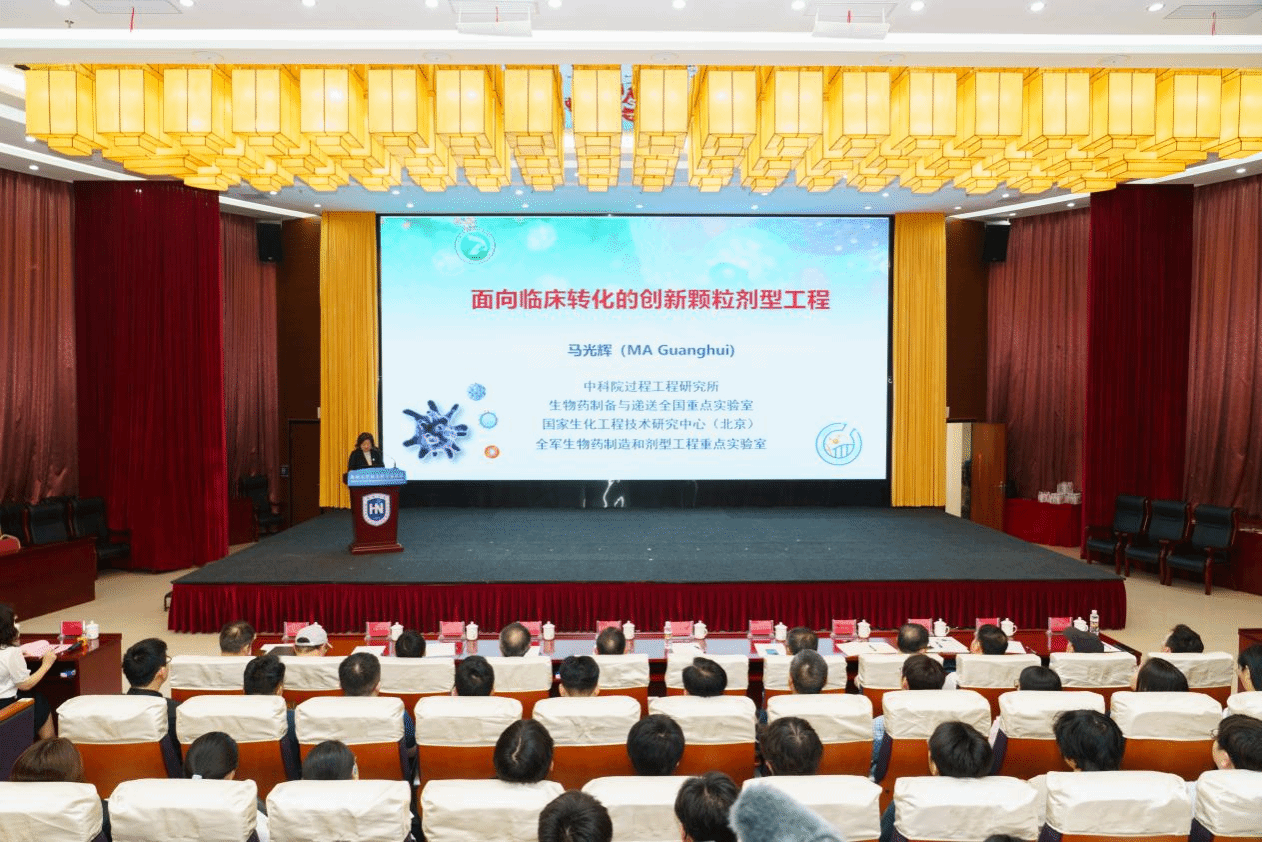
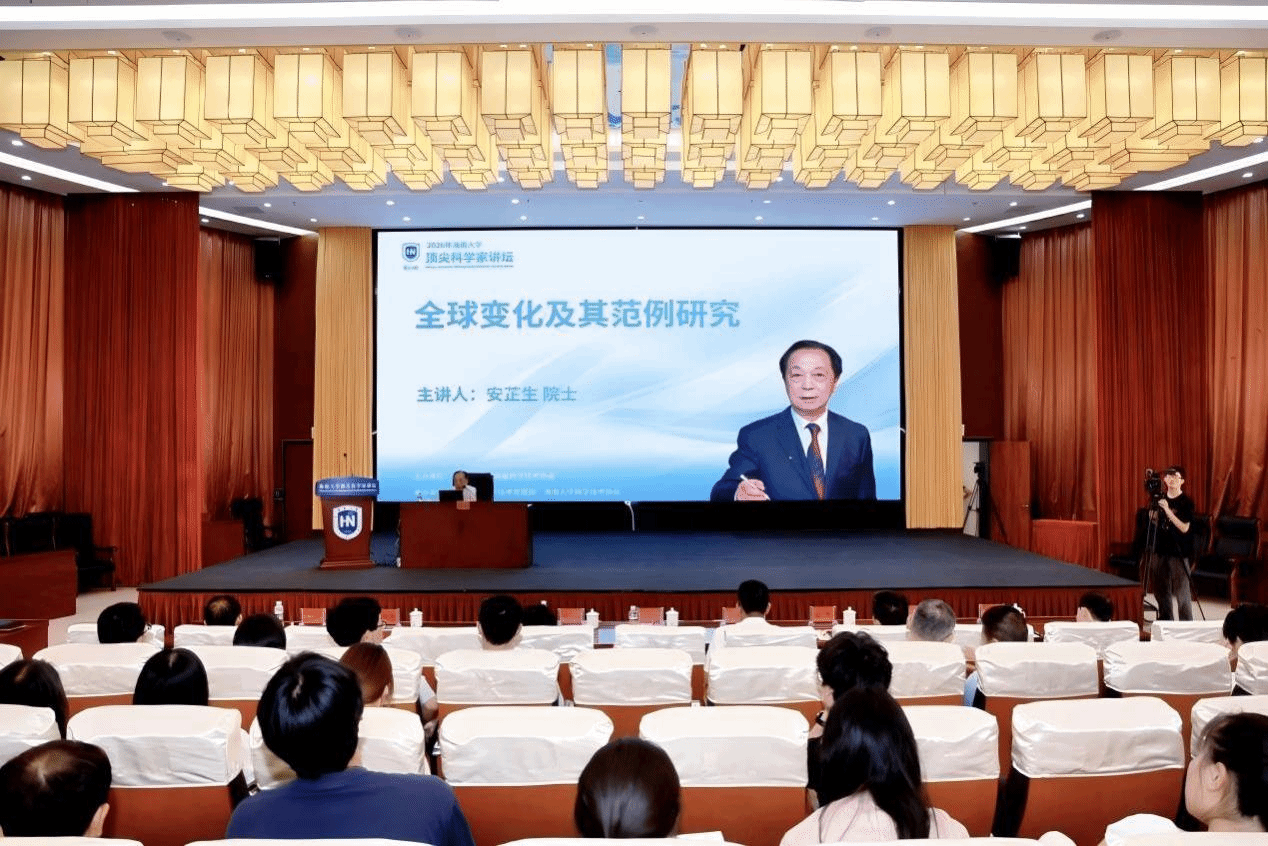
The 51st HNU Distinguished Scientist Lecture was held at the auditorium of the Social Sciences Complex on the afternoon of December 3rd. Professor Hao Xiaojing—a Fellow of both the Australian Academy of Science and the Australian Academy of Technological Sciences and Engineering, and a Tenured Professor at the School of Photovoltaic and Renewable Energy Engineering, University of New South Wales (UNSW)—was invited to deliver a lecture titled “Hybrid Horizons: Thin-Film Engines for Next-Generation Tandem PV.”
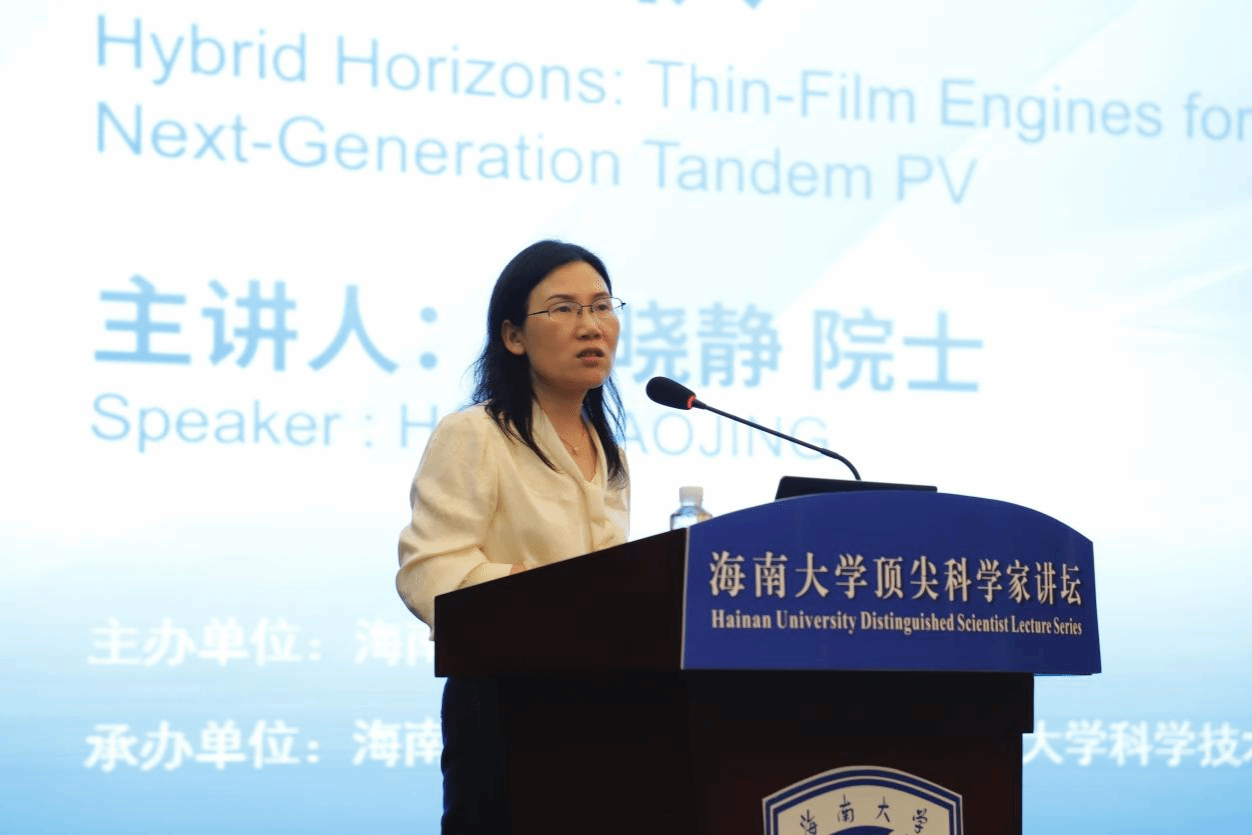
Professor Hao Xiaojing delivering the lecture (Photo by Zhang Mengting)
Professor Hao opened her lecture with a personal and historical perspective, recounting her academic journey alongside the pioneering role UNSW has played in solar cell development. She provided an overview of the material systems and applications of current photovoltaic technologies, underscoring that photoconversion efficiency remains the central driver of progress in the field. While acknowledging the continued dominance of crystalline silicon photovoltaics, she argued that to significantly reduce the levelized cost of electricity (LCOE) and boost efficiency, the industry must look beyond the theoretical limits of single-junction silicon cells. The most promising solution, she presented, lies in tandem solar cells, which pair a wide-bandgap top cell with a silicon bottom cell. The primary challenge, however, is developing a top-cell material that can deliver the crucial triad of high efficiency, long-term stability, and low manufacturing cost.
Professor Hao then addressed the core bottlenecks in tandem PV development, emphasizing the critical need to diversify the available wide-bandgap thin-film material systems. She highlighted several promising, resource-abundant candidate materials suitable for scalable manufacturing and offering excellent optoelectronic properties. Key scientific challenges at the material level were discussed, followed by an analysis of the primary factors limiting power conversion efficiency (PCE) and corresponding optimization strategies for different material systems.The lecture also showcased her team’s latest breakthroughs in thin-film photovoltaics. Professor Hao concluded with a forward-looking perspective on the future development of thin-film solar cells, outlining new pathways for the technological advancement of the field.
The Q&A session was particularly engaging. Professor Hao fielded a range of questions from the audience, including on the use of artificial neural networks in photovoltaics and the criteria for selecting wide-bandgap thin-film materials. She provided detailed responses, drawing on her extensive research experience to offer valuable insights.
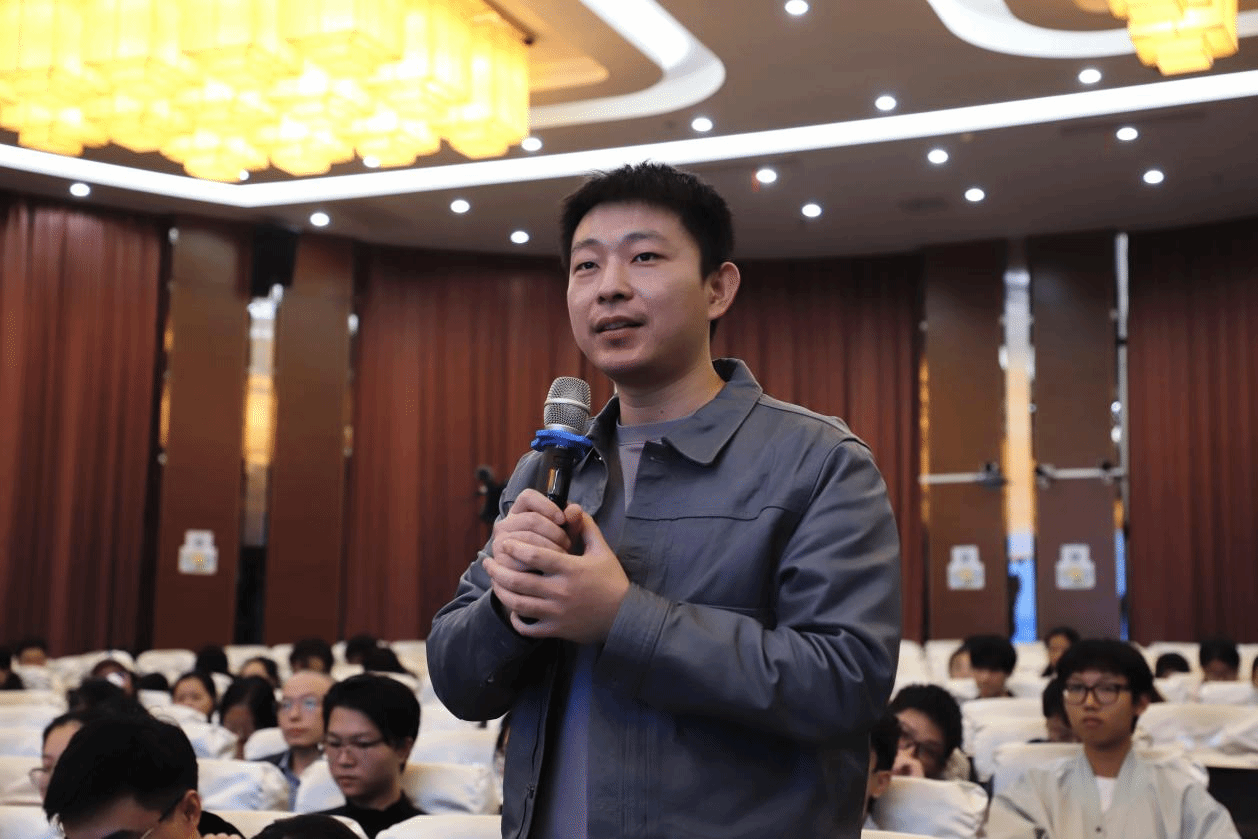
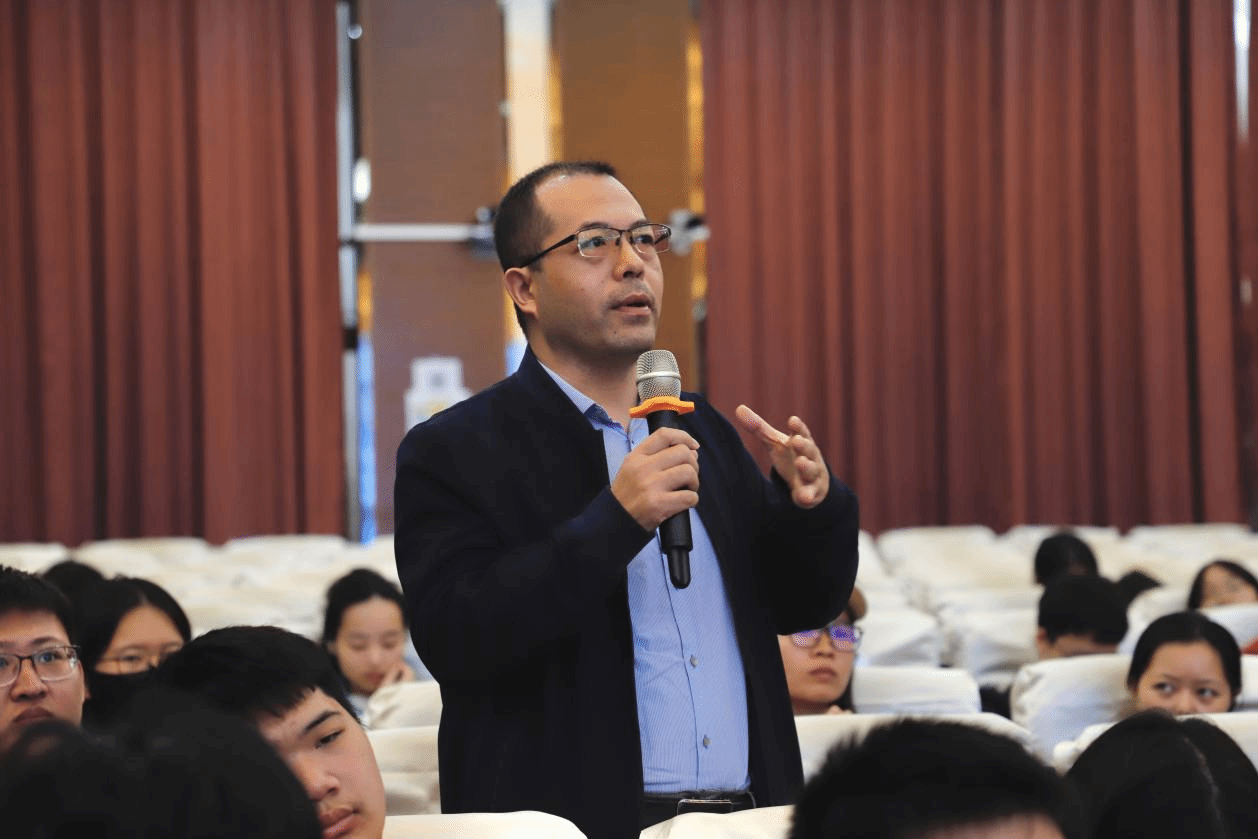
Audience Q&A session (Photo by Zhang Mengting)
The auditorium was filled to capacity, with the audience engrossed in the lecture. Representatives from Hainan Association for Science and Technology, sci-tech professionals, over 500 faculty and student representatives from all HNU campuses, as well as heads of the departments concerned, participated online or in person.
Translated by Yan Xinyang
Proofread by Liu Sujun