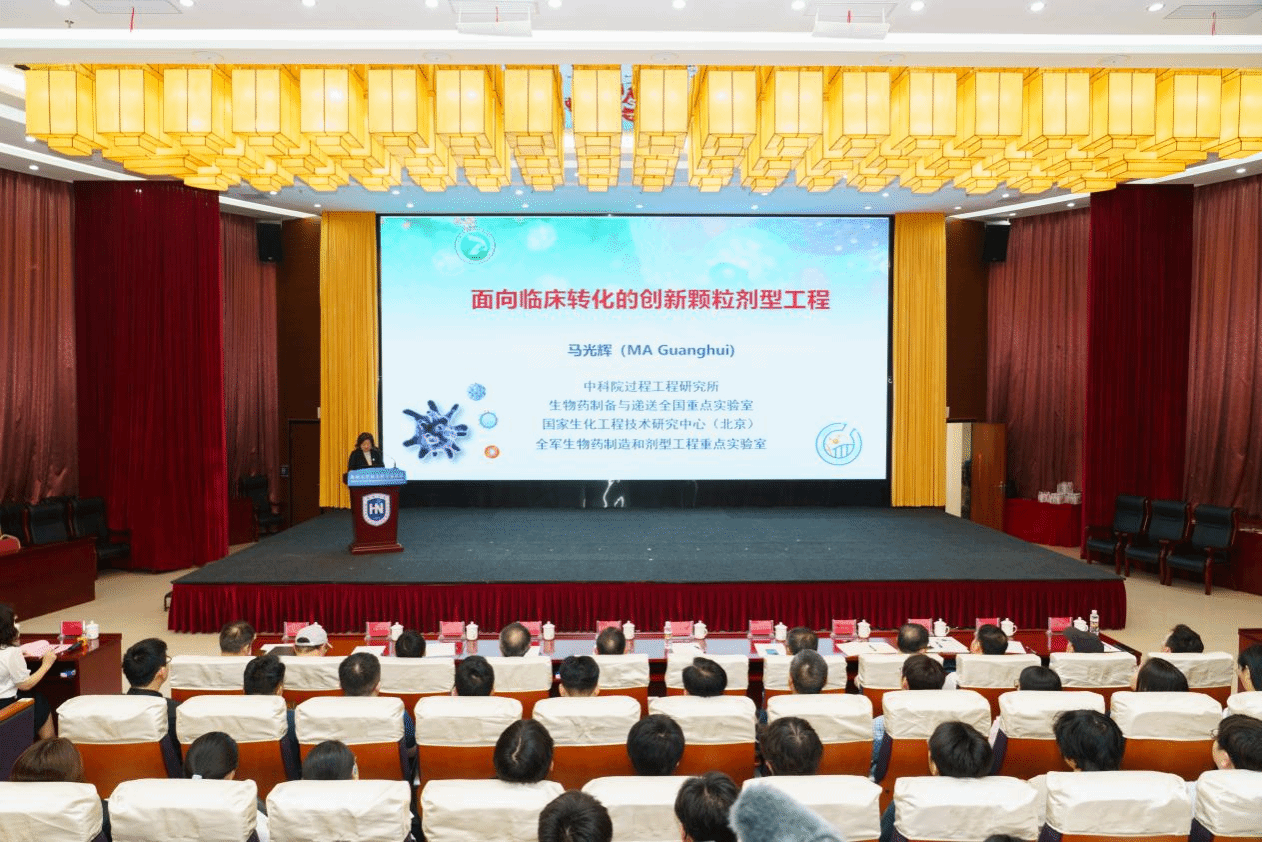
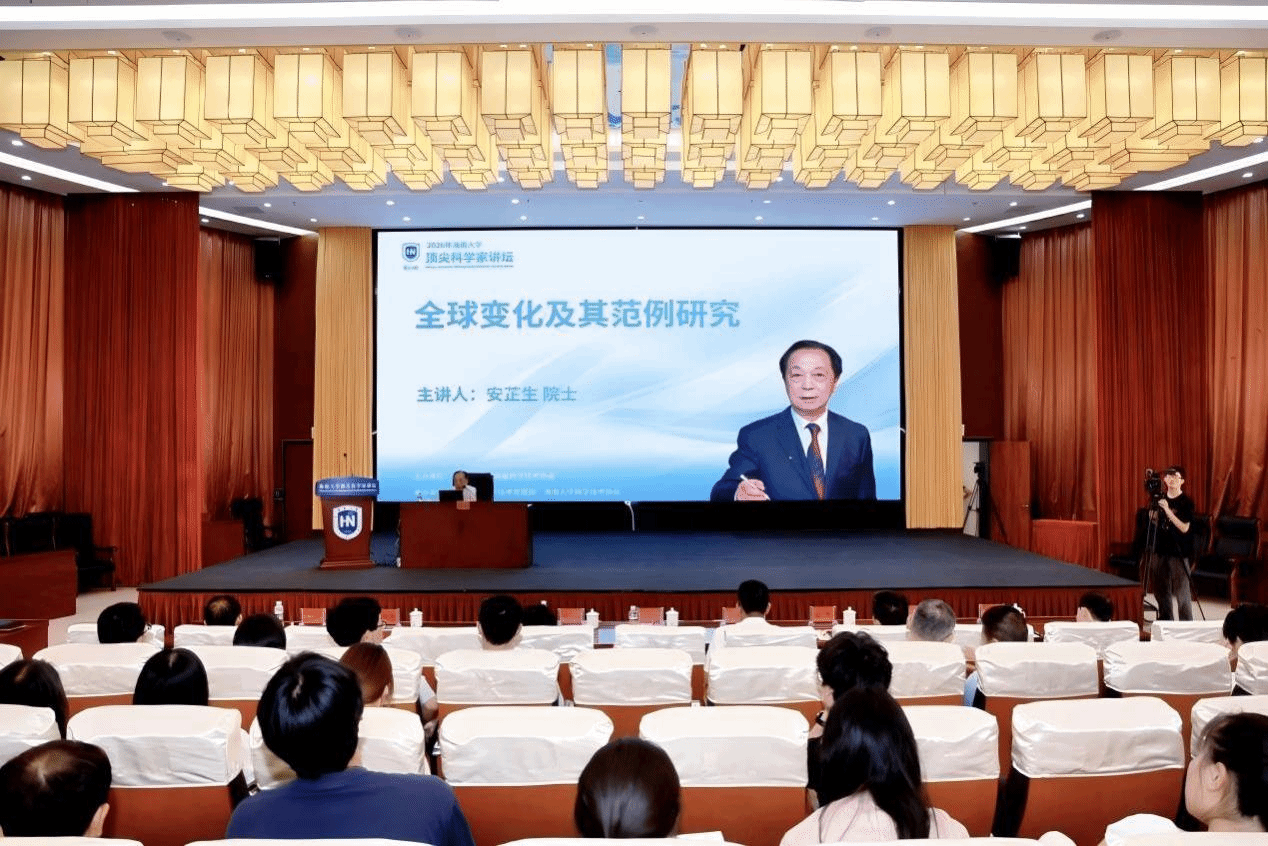
On November 28, the 50th session of HNU Distinguished Scientist Lecture Series was held at the auditorium of the Social Sciences Complex. Prof. Wang Hongyang - Academician of the Chinese Academy of Engineering (CAE) and The World Academy of Sciences for the Advancement of Science in Developing Countries (TWAS), and a leading expert in oncology and molecular biology—delivered a keynote lecture titled “Cancer Research: New Technologies Fueling Paradigm Shift and Rapid Advances”. In attendance were Prof. Ge Yang from the School of Medicine at Shanghai Jiao Tong University, He Yong, Secretary of the Discipline Inspection Commission of HNU, and Vice President Liu Qian, who presided over the event.
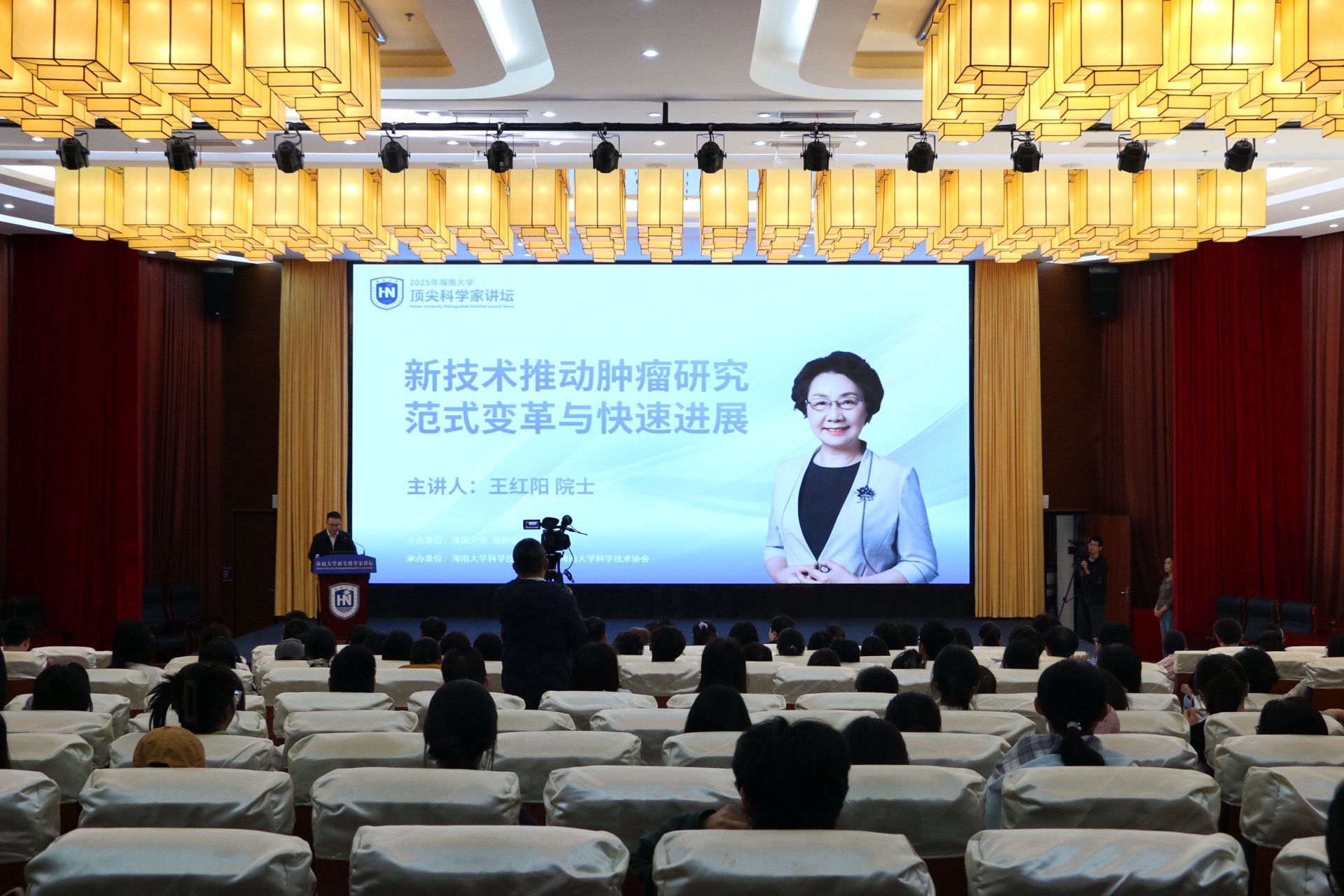
The 50th session of HNU Distinguished Scientist Lecture Series is held at the auditorium of the Social Sciences Complex on November 28. (Photo by Wu Jiarui)
Prof. Wang began by discussing China’s incidence rates, age trends, and prevention and control strategies of malignant tumors. Focusing on the characteristics of cancer, the challenges in early diagnosis and precise treatment of tumors, and the evolving patterns of modern medicine, she analyzed how high-precision new technologies and biomimetic models are reshaping and revolutionizing traditional cancer research. She stated that cancer research is undergoing a profound paradigm shift driven by disruptive technologies, highlighting the role of artificial intelligence and machine learning powered by deep mining of massive omics and clinical data in refining tumor subtyping, predicting therapeutic responses, and accelerating target discovery.
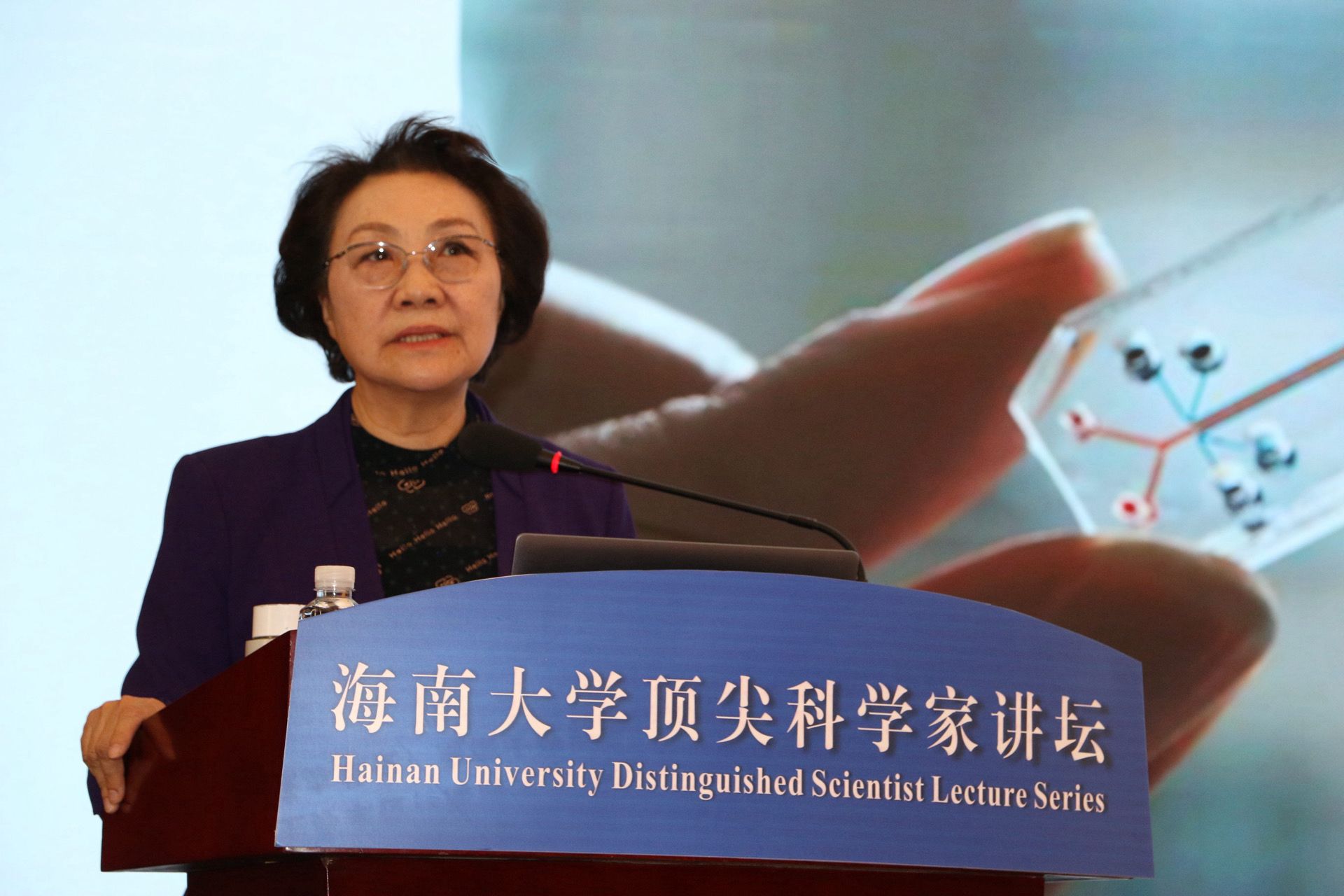
Prof. Wang Hongyang delivers the lecture. (Photo by Wu Jiarui)
Starting from the incidence and treatment of liver cancer in China, Prof. Wang shared relevant research findings from herself and her team. Using cholangiocarcinoma treatment as an example, she analyzed how cutting-edge technologies are translating basic findings into clinical research. Combined with research on hepatobiliary tumor organoids, she explained how organoid technology leverages its advantage of highly simulating human tumor heterogeneity to provide a powerful preclinical research platform for drug screening and personalized therapy. She indicated that the integration of new technologies is driving oncology to achieve a historic leap: from population-level analyses to precision, single-patient interventions; from static snapshots to dynamic panoramic views; and from single-dimensional data to integrated, multidimensional profiles, laying a solid foundation for cancer research development.
On behalf of Hainan University, He Yong presented a commemorative plaque of the Distinguished Scientist Lecture Series to Prof. Wang Hongyang.
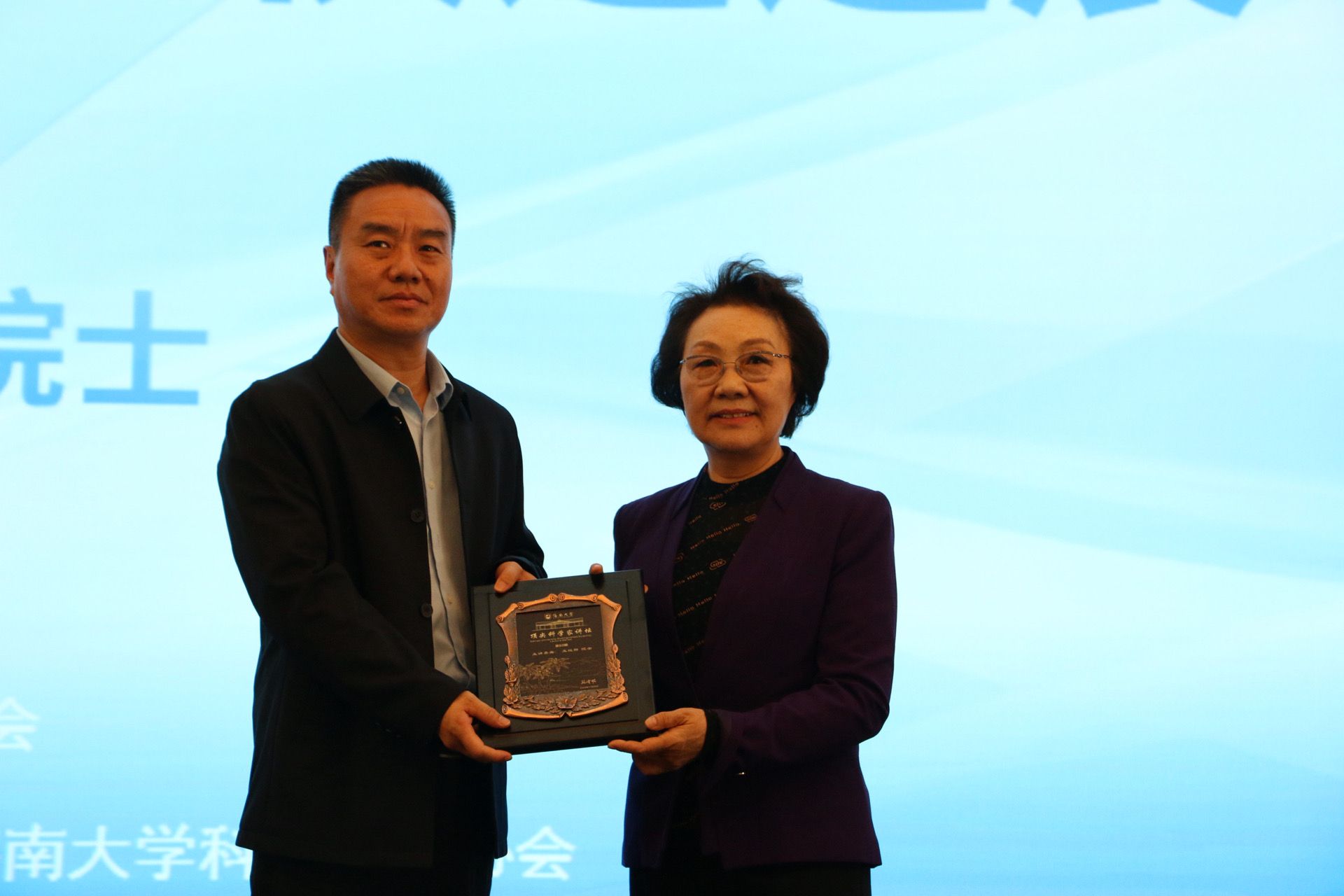
He Yong presents the commemorative plaque to Prof. Wang Hongyang. (Photo by Wu Jiarui)
The lecture hall was packed with faculty and students who listened with rapt attention. They engaged in lively discussions covering tumor prevention and screening, as well as the holistic paradigm of cancer research, with Prof. Wang fielding questions from the floor.
Senior officials from the Hainan Association for Science and Technology, delegates from professional societies, as well as representatives of enterprise and university ST associations joined the lecture in a hybrid format. On site and online were also over 700 faculty members and students from HNU’s four campuses—Haidian, Danzhou, Mission Hills (including the Chengxi site) and Yazhou Bay.
Translated by Wang Zixuan
Proofread by Guo Jinping