On the afternoon of March 24, the 58th Distinguished Scientist Lecture of Hainan University was held at the lecture hall on the second floor of the Social Sciences Building.
Yang Chunhe, Member of the Chinese Academy of Engineering and researcher at the Institute of Rock and Soil Mechanics, delivered a lecture titled “Deep Underground Energy Storage: Opportunities and Challenges”. Luo Qingming, Member of the Chinese Academy of Sciences and President of Hainan University, along with other members of the university leadership attended the lecture.
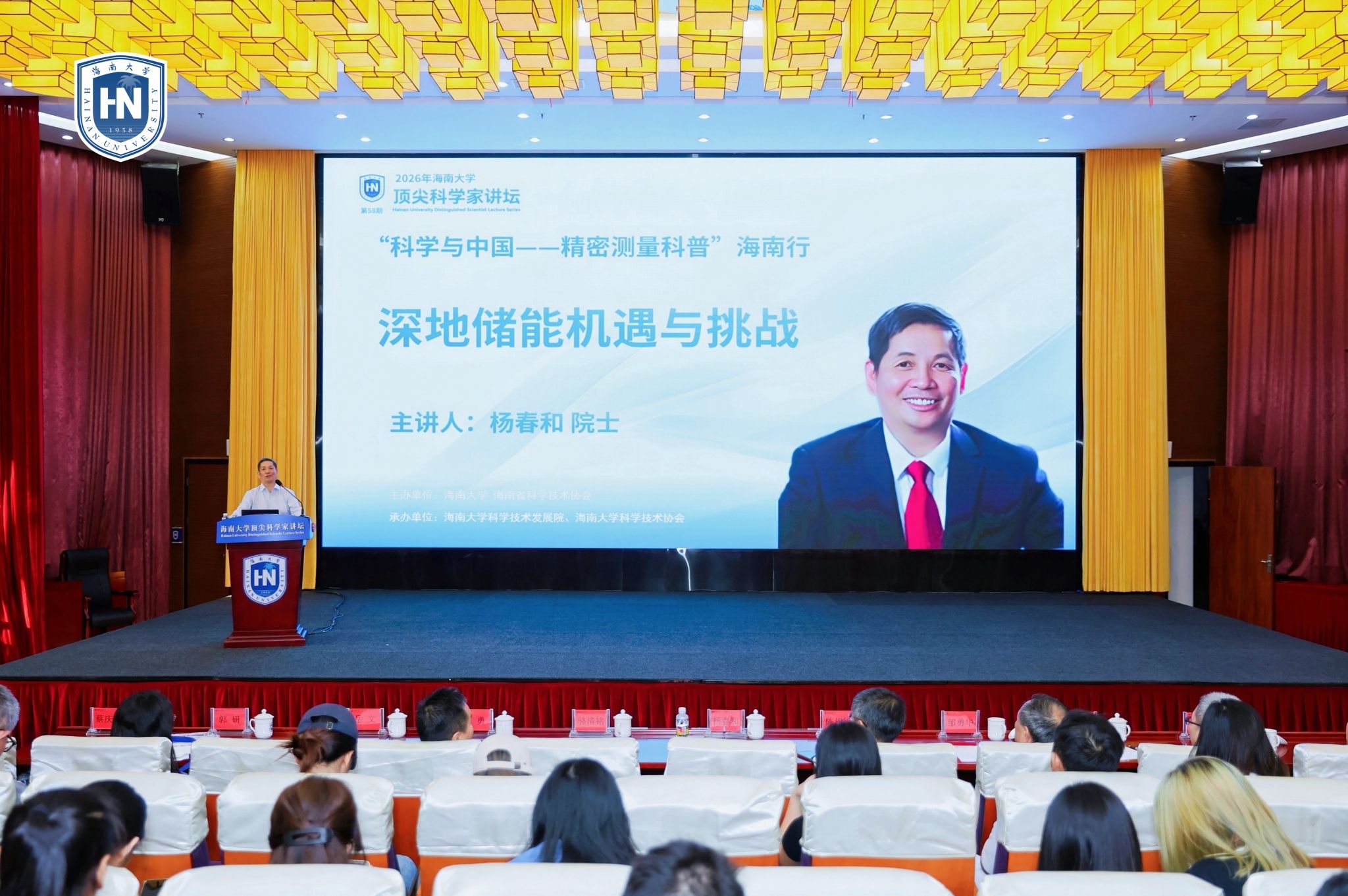
On the afternoon of March 24, the 58th Distinguished Scientist Lecture is held at Hainan University’s Social Sciences Building
In his lecture, Yang Chunhe began by explaining the concept and significance of deep underground energy storage. He noted that deep underground energy storage is an important approach for storing multiple forms of energy and a key part of the energy network infrastructure. It plays a vital role in improving the efficiency of clean energy utilization and ensuring energy supply security, particularly in areas such as grid balancing and strategic reserves. He also provided a systematic overview of the development and application of deep underground energy storage both in China and abroad, covering technologies such as compressed air, hydrogen, natural gas, and petroleum storage.
Yang Chunhe pointed out that China still faces a number of challenges in advancing deep underground energy storage. Large-scale geological storage of hydrogen remains critical, while issues such as the multi-scale progressive failure of geological formations, the complex mechanical – chemical – biological interactions involved in underground hydrogen storage, and the unclear mechanisms governing multi-scale seepage evolution require further research. He further shared China’s research foundations and strengths in this field, including the development of experimental simulation systems for deep underground energy storage, the establishment of theoretical frameworks for underground oil and gas reserves, and methods for predicting the seepage of small-molecule gases in tight salt formations. Drawing on his own research experience, he emphasized that despite the challenges, the field offers significant opportunities and encouraged faculty members and students to pursue innovation with determination.
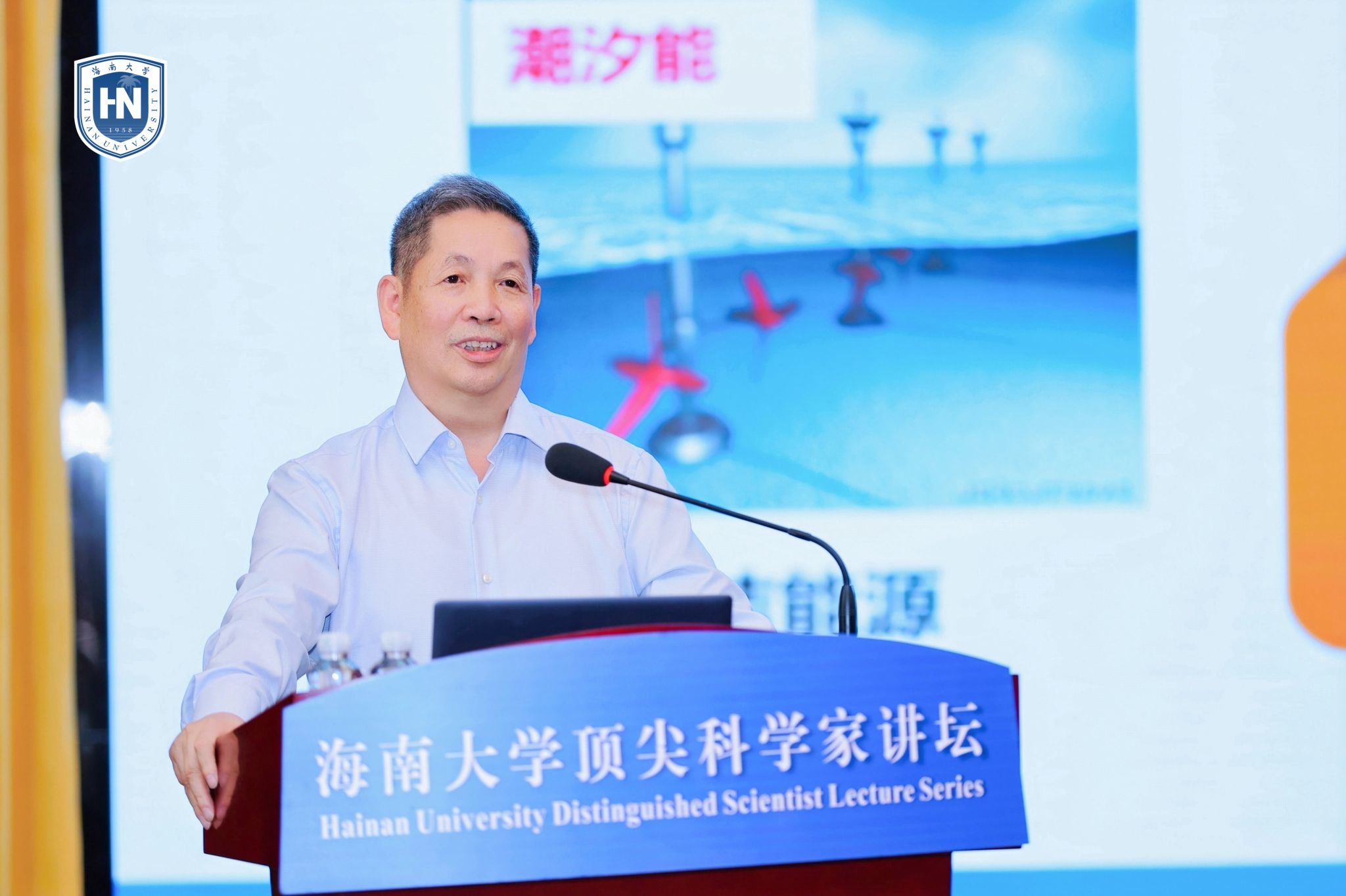
Yang Chunhe delivers the report.
The lecture hall was filled to capacity. Faculty members and students engaged in discussions with Yang Chunhe on topics such as cement-based sealing materials, deep-sea carbon sequestration, and the safety of hydrogen storage, to which he responded in detail.
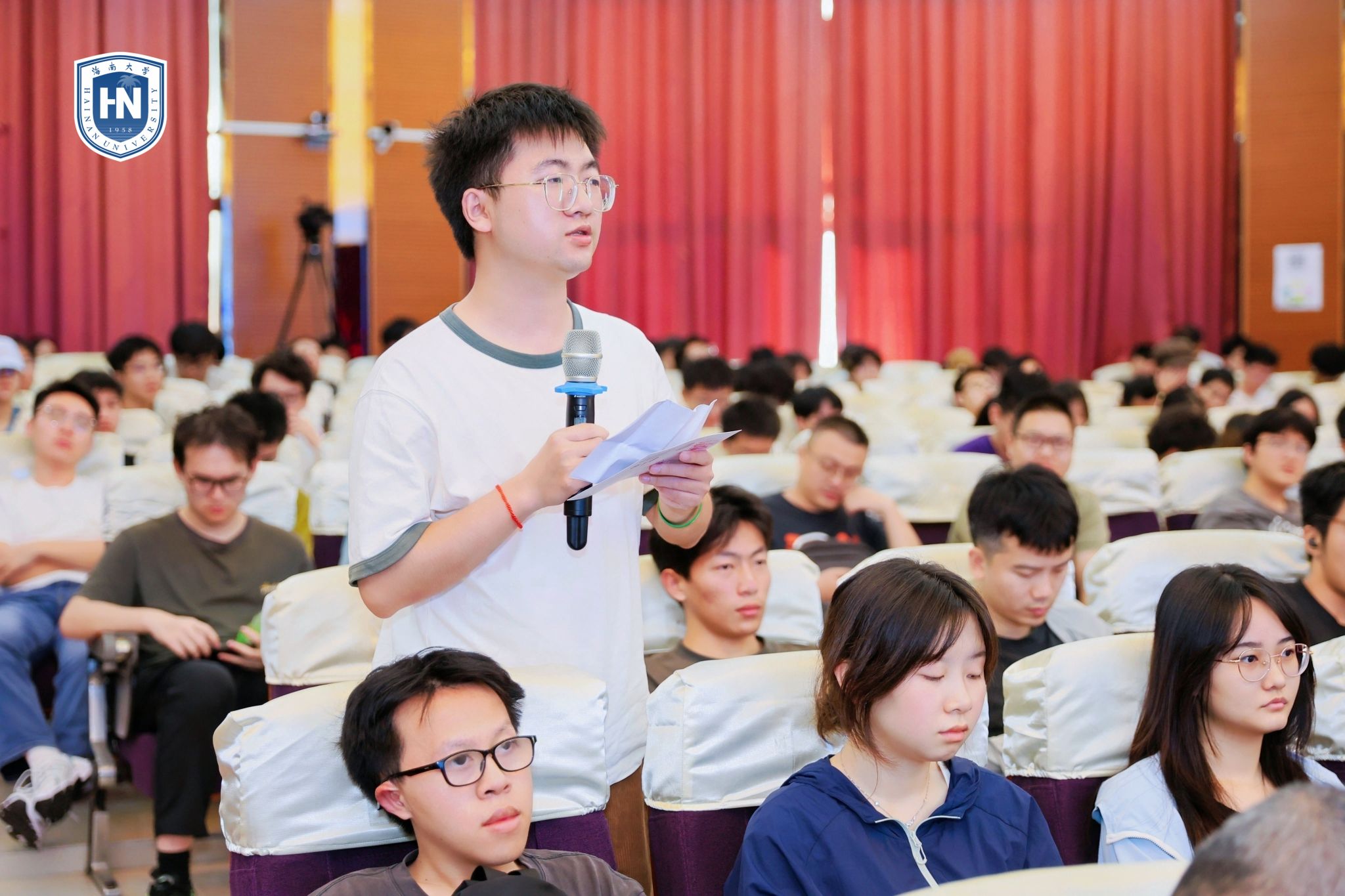
Audience engage in a Q&A session.
Following the lecture, Yang Chunhe held a face-to-face exchange with young faculty representatives from the School of Physics and Optoelectronic Engineering.
Officials from relevant departments of the Chinese Academy of Sciences and the Hainan Association for Science and Technology attended the lecture. They were joined by representatives from various schools and departments of Hainan University, as well as faculty and student representatives from the Haidian, Danzhou, Mission Hills (including the Chengxi Teaching Site), and Yazhou campuses, both online and offline.
Translated by Zhang Xiaohan
Proofread by Yang Jie