On the morning of January 13, 2026, Li Ruiying, a household name as former chief anchor of China Central Television (CCTV), was formally appointed as a visiting professor at Hainan University (HNU). To mark the occasion, she delivered a keynote lecture titled “The Art of Spoken Communication in an International Context” for the university’s 17th Luminaries Lecture Series in Humanities and Social Sciences.
Li currently serves as Broadcasting Director at China Media Group (CMG) and Chair of the Broadcasting and Hosting Art Professional Committee at the China Federation of Radio and Television Associations (CFRTA). The lecture was hosted by Vice President Chen Jun, with the university’s senior leadership in attendance.
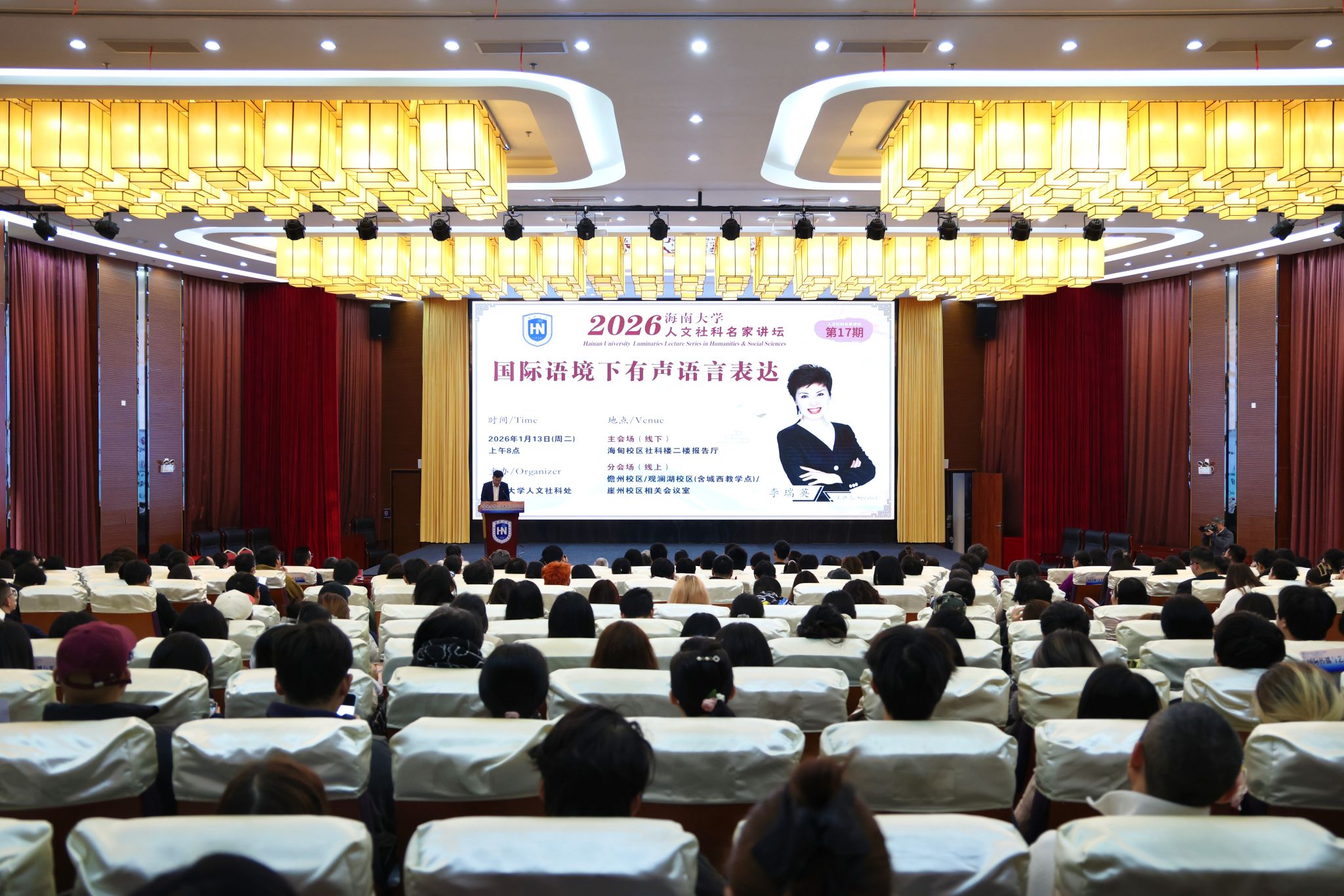
Committee Chair Li Ruiying delivers the keynote lecture ‘The Art of Spoken Communication in an International Context’ at Hainan University on January 13, 2026.
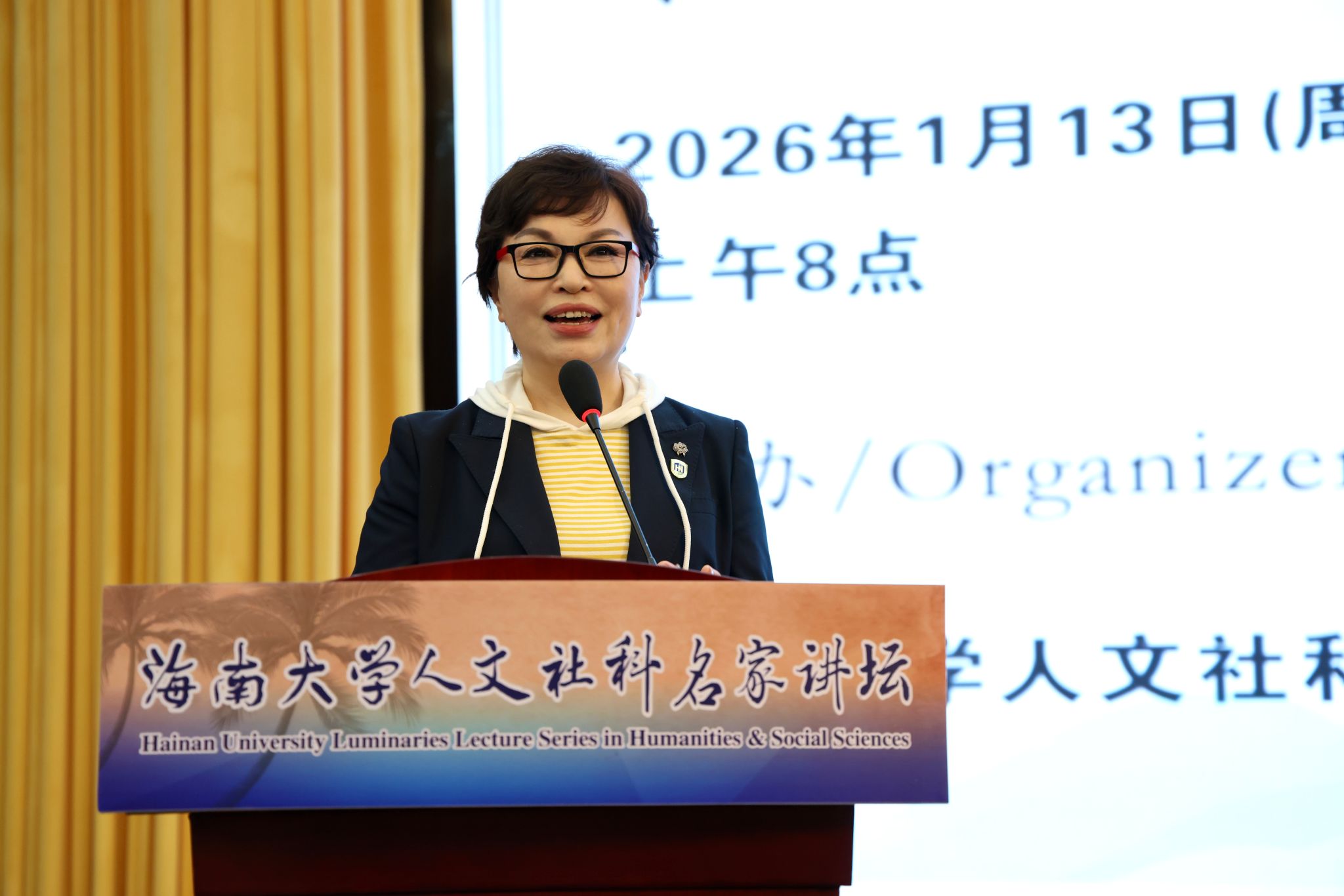
Committee Chair Li Ruiying appointed HNU Visiting Professor delivers keynote at HNU Luminaries Lecture Series in Humanities and Social Sciences on January 13, 2026.
The spoken language is our second face—through its chosen phrases, rhythm, pace, and very tone, it carries the imprint of one’s values. In global communication, it is not merely a vehicle for information, but a vital representation of cultural identity and national image.” Li stated.
Drawing on her decades of frontline reporting, anchoring, and executive experience in media, Li outlined core strategies for enhancing spoken communication on the international stage.
Li proposed that effective spoken expression in international communication hinges on the deliberate cultivation of four core competencies: field reporting, news judgment, editorial thinking, and narrative craft. She analyzed this framework through four dimensions: contextual adaptability, intrinsic motivation, applied skill, and polished delivery.
Li highlighted three emerging trends in international spoken communication, driven by the growth of new popular culture: the rise of amateur creators into the mainstream, content grounded in everyday life, and a people-centered purpose focused on positive, value-driven storytelling.
Addressing the students, Li said, “Every one of you can become a powerful global voice for the Hainan Free Trade Port.” Given the free trade port’s launch of independent customs operations and increasing international appeal, she stressed the importance of showing cultural respect through mindful communication.
She advised young people to break out of the hyper-competitive cycle and carve out their unique place by turning personal strengths into public value. For example, “Yi Gongzi,” a self-media video channel dedicated to art popularization, achieves a balance of depth, clarity, and empathy, winning both a broad audience and widespread acclaim.
Li emphasized two core aspects of professional excellence: honed skill, developed through meticulous textual design and mastery of diverse forms—from recitation and narration to improvisation; and polished delivery, achieved through rigorous preparation, precise execution, and conscious management of one’s professional poise and presentation.
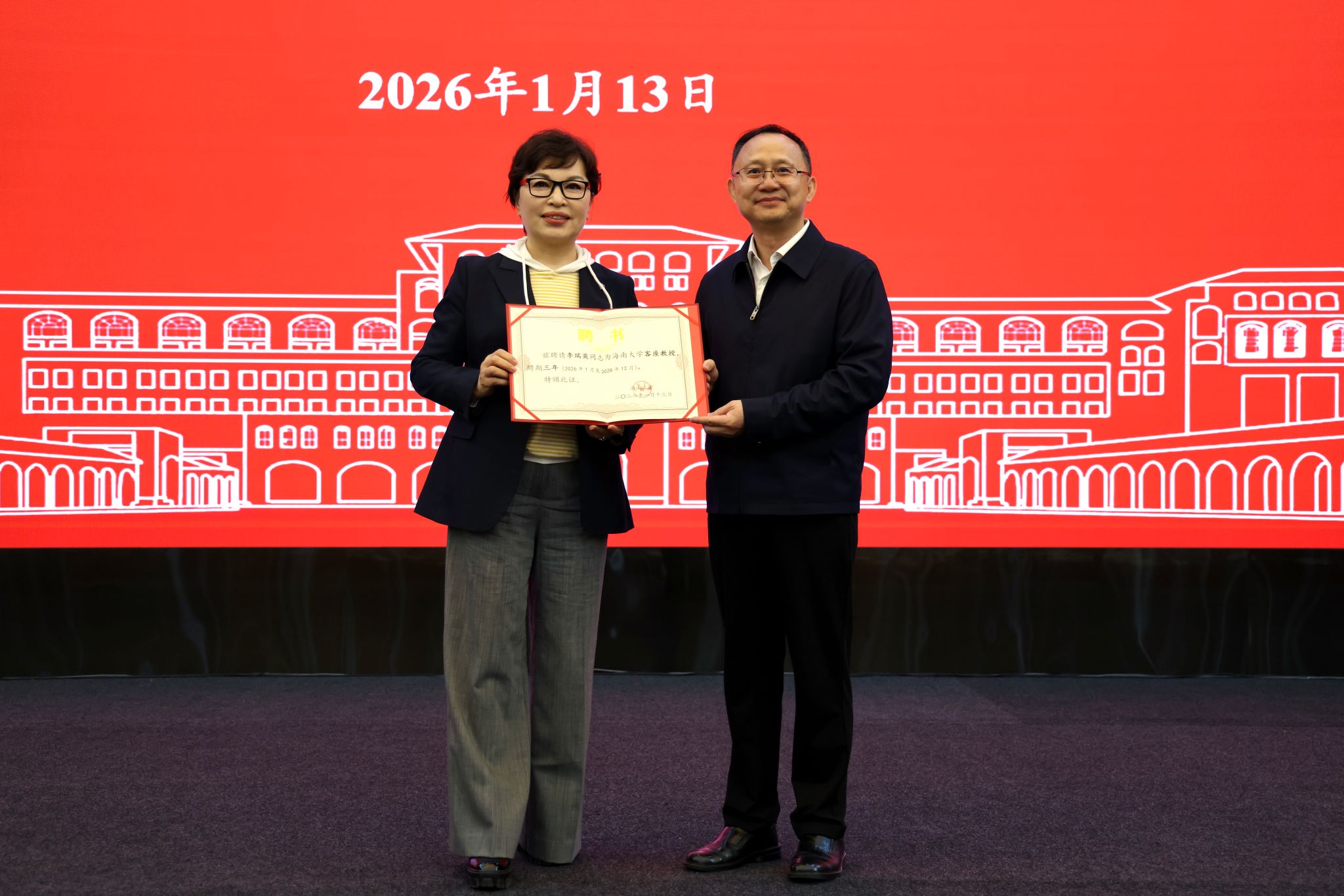
HNU President and CAS academician Luo Qingming presents Committee Chair Li Ruiying with the letter of appointment and the university pin.
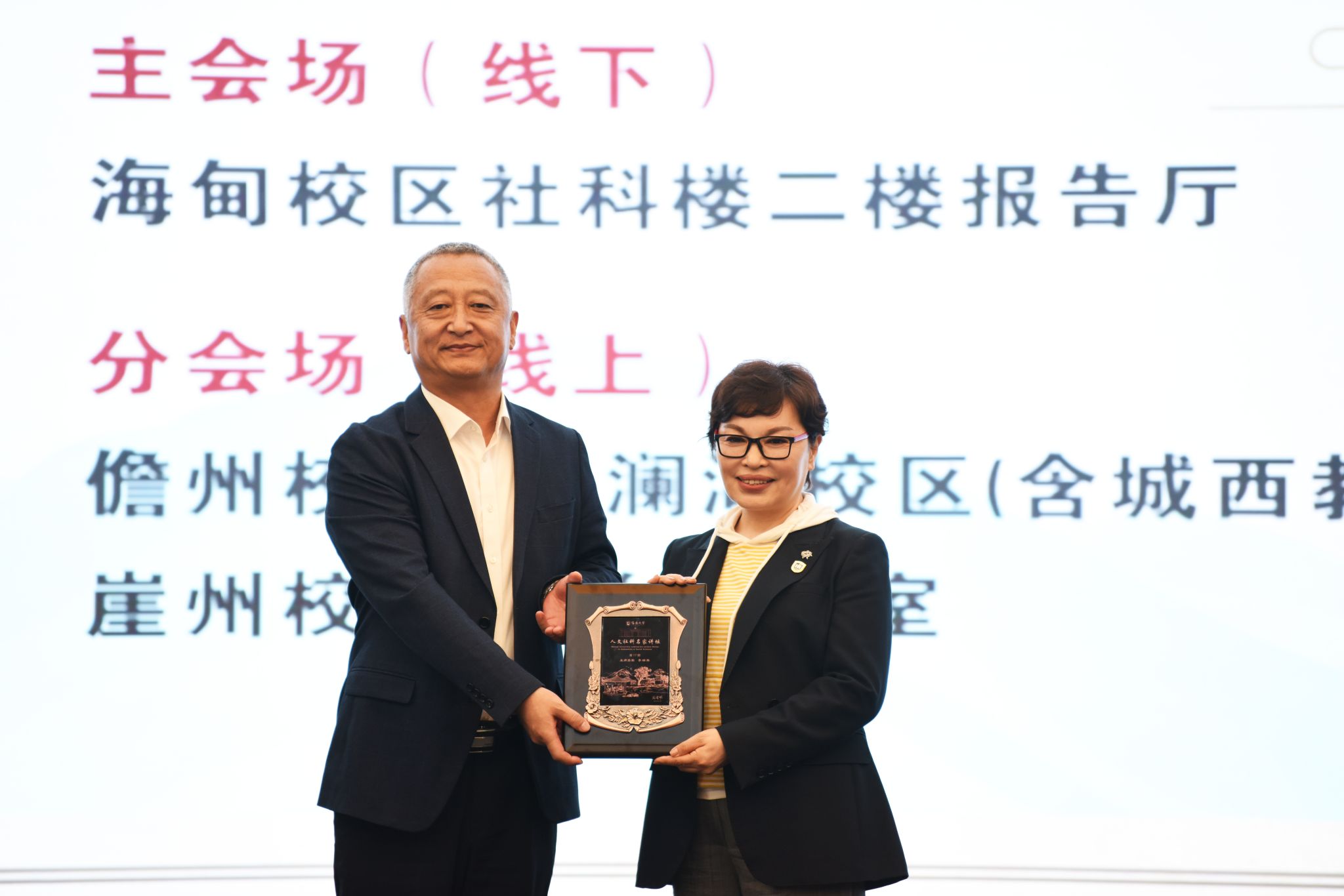
Chairman of the HNU Council Li Hu presents a commemorative plaque to Committee Chair Li Ruiying in honor of her keynote lecture at the 17th HNU Luminaries Lecture Series in Humanities & Social Sciences.
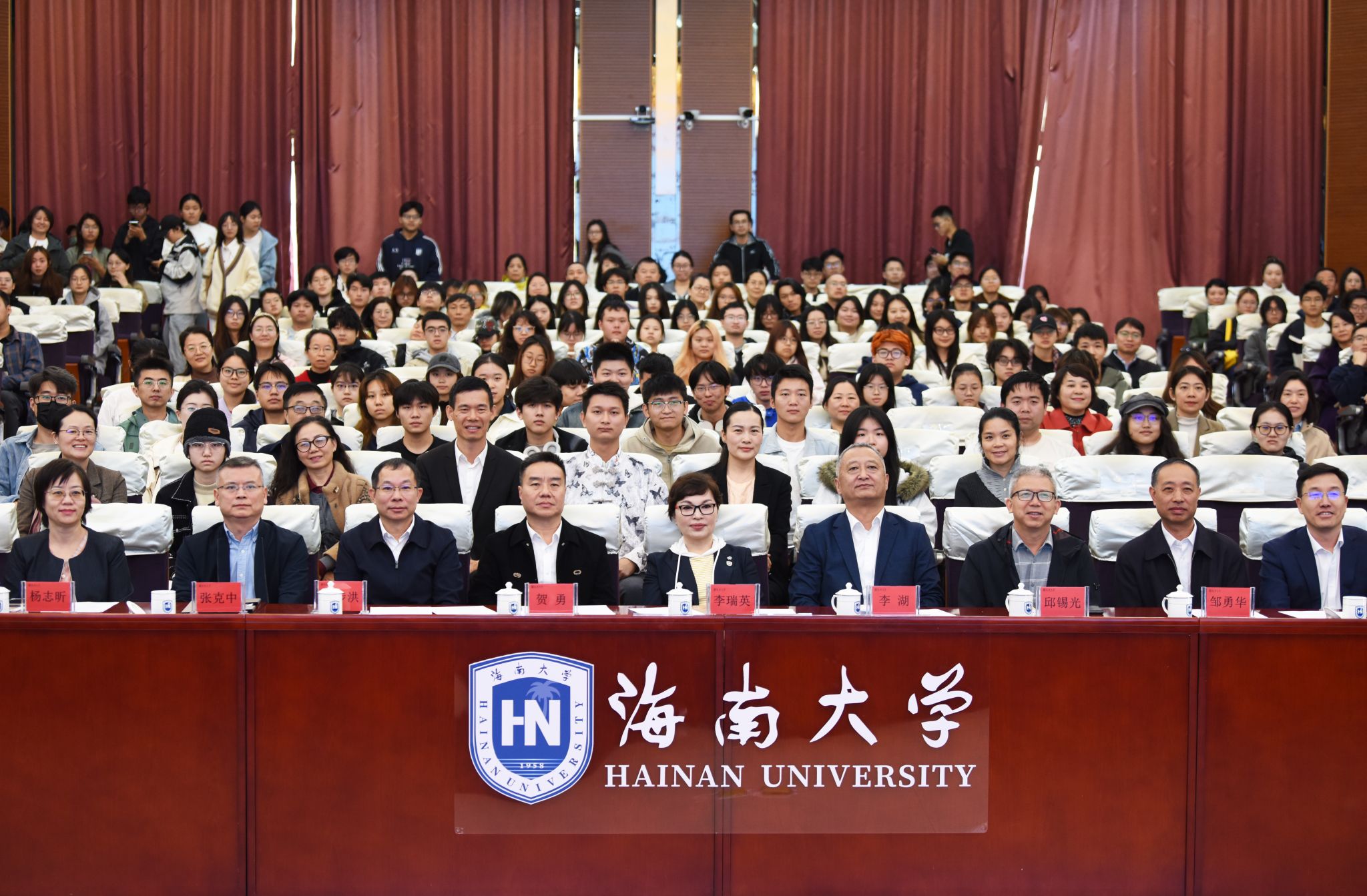
Committee Chair Li Ruiying is joined by senior leadership, faculty, and students of HNU.
The lecture was attended both online and in person by heads from relevant departments and units, as well as faculty and student representatives from across all of Hainan University’s campuses: Haidian, Danzhou, Mission Hills (including the Chengxi teaching site), and Yazhou.
Translated by Huai Beibei
Proofread by Jin Ying