On April 24, HNU inaugurated its first overseas science and technology backyard in Kitwe, Copperbelt Province, Zambia. Vice President Gao Diangong attended the unveiling ceremony.
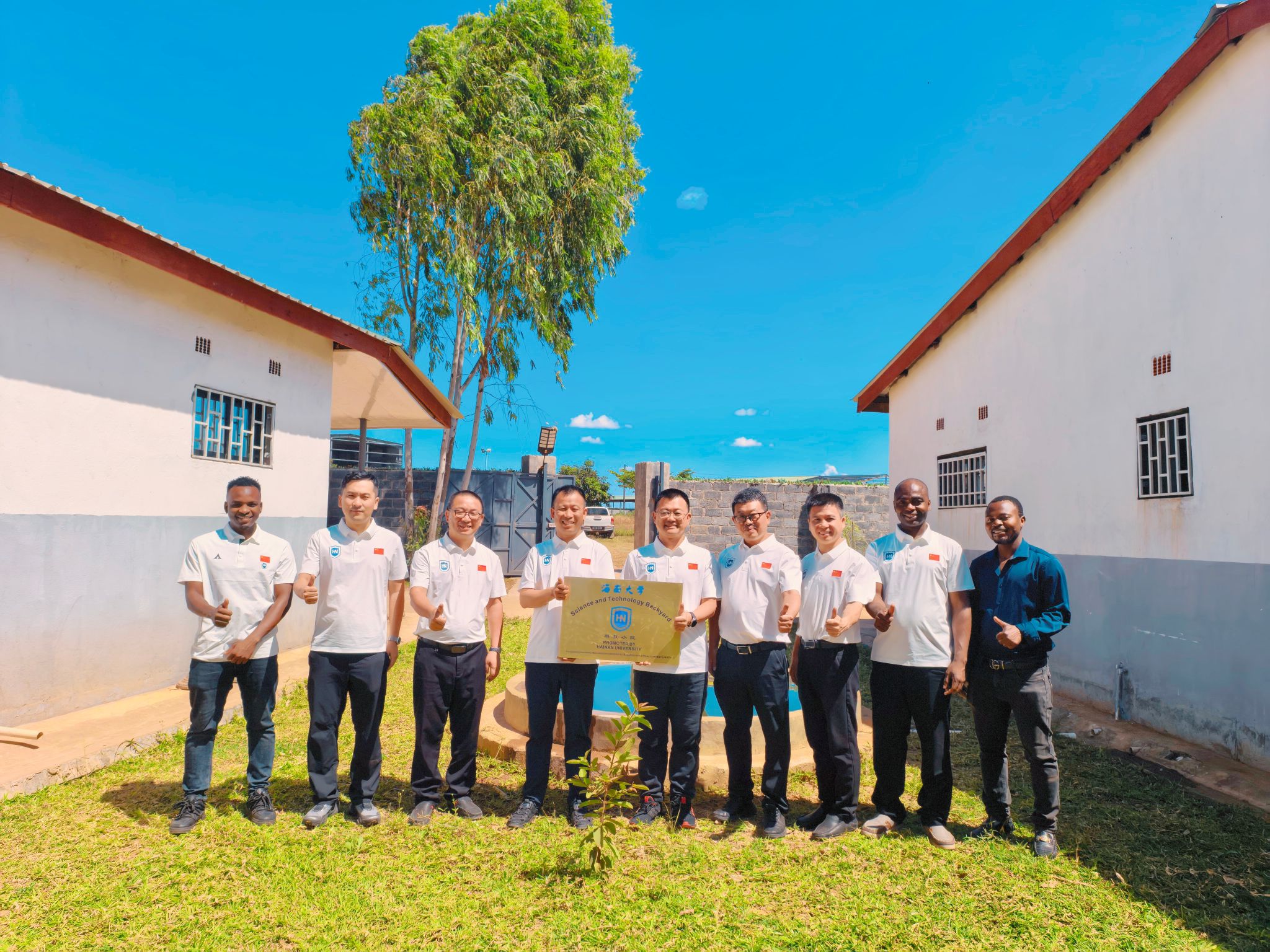
On April 24, the first overseas sci-tech backyard of HNU was inaugurated in Kitwe, Copperbelt Province, Zambia.
The sci-tech backyard, led by chief expert Prof. Wang Zhiyong from the School of Tropical Agriculture and Forestry, is established in partnership with Mulungushi University and supported by the 100-hectare agricultural demonstration base of ANTUO Industrial Co., Ltd. Its mission focuses on tropical forage breeding and industrialization, the promotion of cash crop cultivation technologies, and agribusiness services. Through a dual “technology+economy” approach, it aims to facilitate the transfer of Chinese tropical agricultural expertise to Africa.
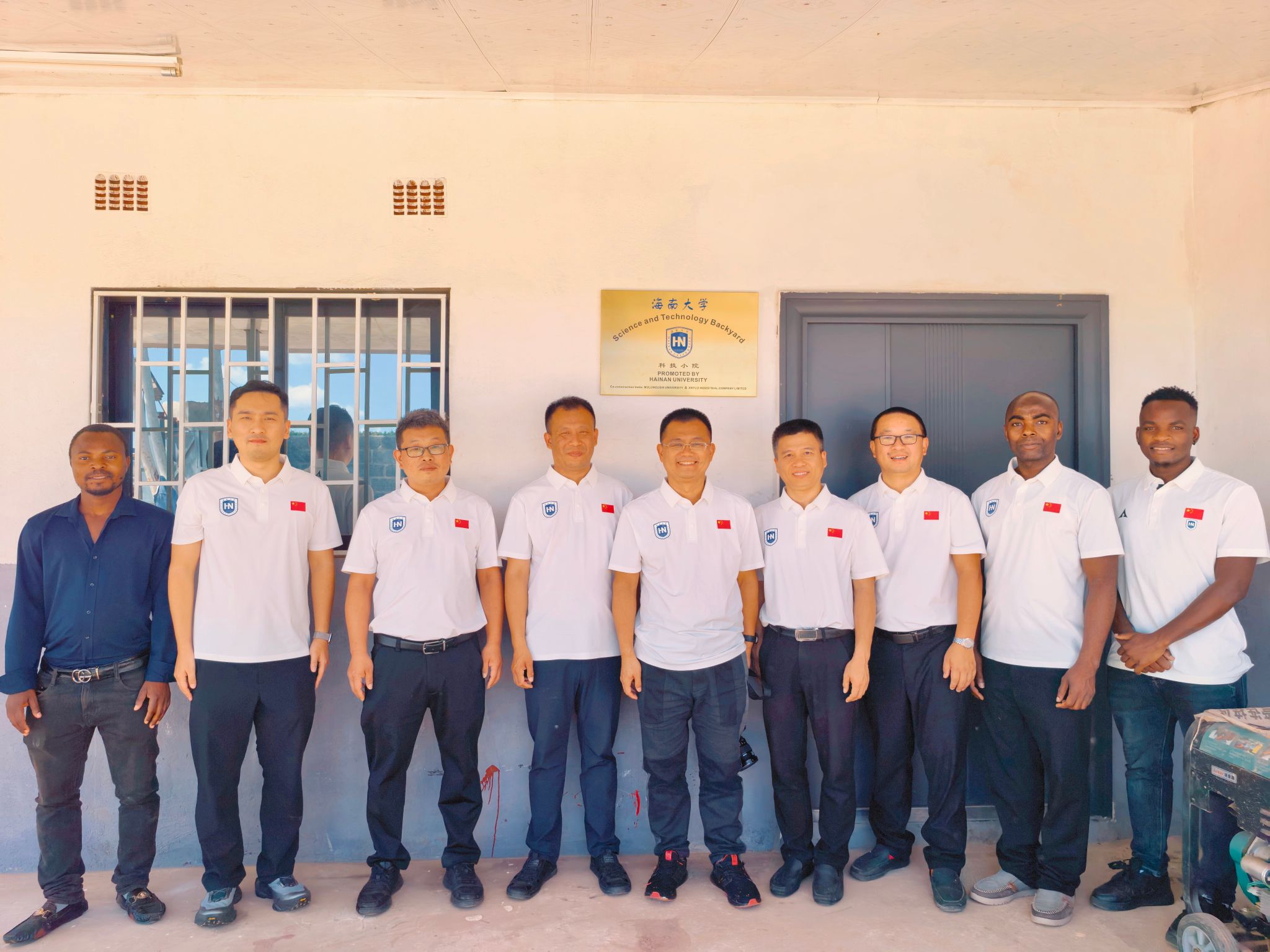
On April 24, the first overseas sci-tech backyard of HNU was inaugurated in Kitwe, Copperbelt Province, Zambia.
Zambia has approximately 42 million hectares of arable land, yet less than 15% is effectively utilized. Leveraging its research strengths in tropical agriculture, HNU has adopted a collaborative model combining corporate “funding + land” with university “technology + talent”. Under this framework, HNU has signed a technology transfer agreement worth 1 million yuan complemented by sales commission. This arrangement provides a sound cooperation mechanism and financial stability for the backyard’s long-term operations.
“We will live up to expectations and strive to build this backyard into a benchmark for China-Zambia agricultural cooperation,” said Prof. Wang. According to the master plan, this programme aims to select two to three forage varieties suited to local conditions within three years. It will set up a pilot production line for silage feed, promote large-scale pastures covering more than 1,000 mu (approx. 67 hectares), and draft the “Guidelines for the Transfer of Tropical Agricultural Technologies to Africa”. Building on these achievements, this program will further plan the development of a “zero-carbon farm”.
In terms of talent nurturing, this backyard will host two postgraduate students each year and enroll students from Mulungushi University for master’s or doctoral degrees in China. By fostering a tripartite collaborative innovation community among Hainan University, Mulungushi University, and Chinese enterprises, it will contribute Hainan’s expertise to agricultural cooperation under the Belt and Road Initiative.
Translated by Huang Yuwen
Proofread by Kuang Xiaowen